Amazon prime on tablet amazon prime tablet deals amazon tablets on sale prime what tablet should i buy should i buy stocks when they are low or high should you buy apple stock should you buy a condo should you buy a house now should you buy a car now should you upgrade to windows 11 should you rake leaves in fall should you exercise when sick
Should You Buy a High-End Tablet on Prime Day?
Should You Buy a High-End Tablet on Prime Day?
This story is part of Amazon Prime Day, CNET's guide to everything you need to know and how to find the best deals.
Short answer:Yes, if you're fine with a deal on an older tablet and you aren't picky about particular storage configurations, Prime Day could be a good time to buy. However, you might be best off waiting to see what new models get released later this year.
Amazon Prime Day is coming July 12 to 13, bringing a flood of sales that can get incredibly overwhelming. Every year, some of the discounts are on tablets: iPads, in particular. Should you take the opportunity to upgrade?
If you're looking for a low-cost tablet, the answer's easier: Apple releases new basic iPads (simply called "iPad") each fall, and they're not that expensive to begin with, generally running around $300 to $400. Prime Day can sometimes get you a discount on older models or configurations with more onboard storage. Low-cost Fire Tablets are always on sale, too.
But, for more expensive iPads, the math gets more challenging. The savings can be greater on iPad Air or iPad Pro models, but you may also want to consider waiting until the fall, too.
Should I buy an iPad Pro on Prime Day?
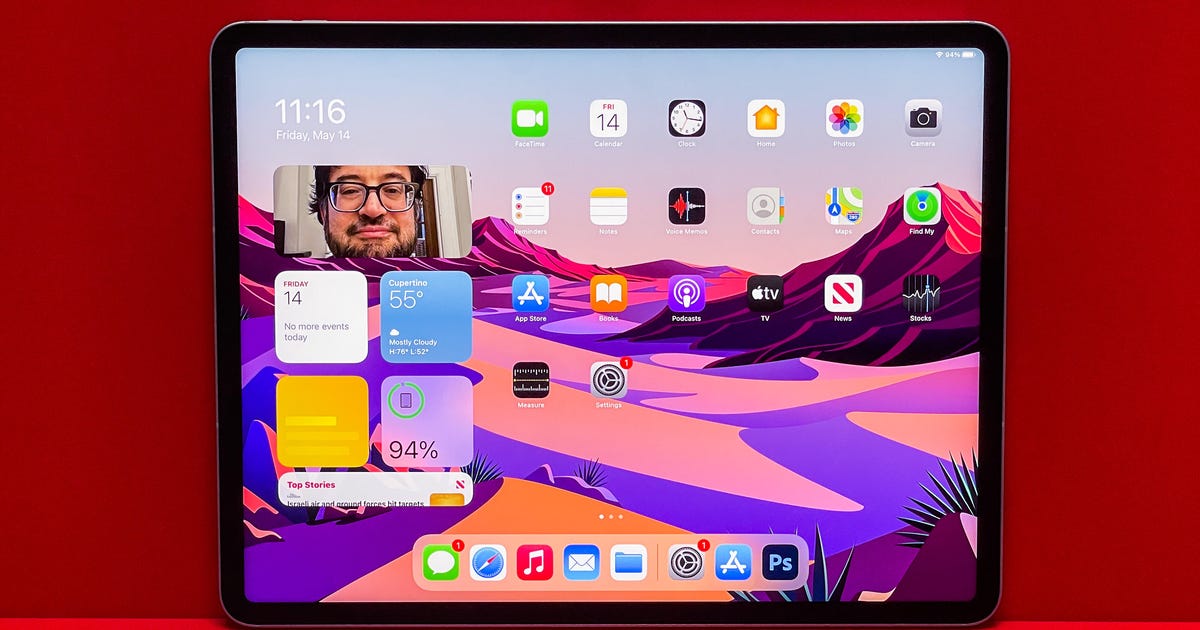
Apple's iPad Pro last got an upgrade in the spring of 2021, which is a long time. New models are probably coming this fall, with expected upgrades to a new M2 chip and who knows what else. The good news on iPads is they generally have a long lifespan, and Apple's highly specced-out Pro models have speed and features that can take years to trickle down to lower-cost iPads. In that sense, getting an older model on sale can end up being a great alternative to buying a newer, less-Pro iPad.
The 2021 iPad Pro has an M1 chip, which seems to be Apple's cutoff for taking advantage of newer multitasking features on iPadOS starting this fall. If you care about software features and future compatibility, you'd better make sure your expensive iPad purchase has an M1.
But if you're fine with an iPad that just works and has some great fancier features, you could still get an older iPad on sale. The 2020 iPad Pro lacks the M1 chip, and doesn't have an autozooming front-facing camera, but it's pretty similar otherwise to the 2021 model.
Keep in mind that only the 12.9-inch 2021 iPad Pro has a step-up Mini LED display that's brighter and has better black-level contrast than other iPad models.
Should I buy an iPad Air on Prime Day?
The iPad Air was updated this spring, and it's very much the iPad Pro at a lower price with most features intact. It lacks the extra camera and depth-sensing lidar sensor that the iPad Pro uses for some AR and 3D scanning features, but it has a great display, four speakers, USB-C charging and the same fast M1 chip, and also works with Apple's Magic Keyboard (although it lacks the faster screen refresh rate of the Pro iPads). If it goes on sale, it's the best pick -- unless you can find a 2021 iPad Pro for even less.
The 2021 iPad Pro is still a better tablet, though, so if the price on the Pro drops to match the 2022 Air, you should definitely buy the iPad Pro instead.
There won't be another iPad Air this year, but Apple could update its base iPad to include a couple of the iPad Air's features (USB-C, maybe, or a faster chip?). These are just guesses, but again, waiting till September could mean getting a new model with new features at a lower price.
What about a Samsung tablet?
Samsung's premium Android tablets are some of the only notable high-end Android tablets left on the market (until Google makes its own Pixel tablet next year, that is, although it's not even clear what OS that will run). Samsung's Galaxy Tab S8 Plus is a great upgrade over Samsung's previous S7 tablet line, and has an included stylus and an AMOLED display. But make sure to keep track of the differences between S8, S8 Plus and S8 Ultra lines and prices to make sure whatever's on sale is actually a good deal. Samsung's tablets go on sale at other places than Amazon and at other times than Prime Day, too.
New solar panel design uses wasted energy to make water from air new solar panel design uses wasted energy to go new solar panel designs for homes new solar panel technology new solar panel designs new solar panel rebates new solar technology new solar panel technology
New Solar Panel Design Uses Wasted Energy to Make Water From Air
New Solar Panel Design Uses Wasted Energy to Make Water From Air
While generating green energy, solar panels usually create excess heat that goes unused. But with a new, innovative design, scientists have found a way to harness those precious leftovers to give the power producers a second purpose: pulling water out of thin air.
Basically, the self-contained system lays solar panels on a special gel that can collect airborne water vapor. As soon as surplus heat coming from the panels touches the gel, the substance releases a sort of mist into a metal box. Within that container, the gas gets condensed into droplets of water.
The team's motivation is to provide energy and water that's cheap, clean and off-grid to residents of remote and especially dry-climate areas.
"Our goal is to create an integrated system of clean energy, water, and food production, especially the water-creation part in our design, which sets us apart from current agrophotovoltaics," Peng Wang, an environmental engineer at the King Abdullah University of Science and Technology in Saudi Arabia, said in a statement. Wang is the senior author of a study on the invention published Tuesday in the journal Cell Reports Physical Science.
A fully drawn schematic of the team's solar panel system.
Renyuan Li
In producing H2O nearly on-demand, these panels are addressing several pressing worldwide health concerns. A 2019 report from Our World In Data indicated that unsafe water results in a startling 1.23 million deaths per year, especially among those living in poverty. And as of 2020, the site notes, one in four people still did not have access to clean drinking water.
Beyond that, the climate crisis has introduced a dramatically heightened risk of drought in drier regions, directly imperiling farming practices. Late last year, the United Nations brought attention to crop devastation in Madagascar that resulted from intense drought, and even suggested the disaster could lead to the world's very first climate change-induced famine.
"Making sure everyone on Earth has access to clean water and affordable clean energy is part of the Sustainable Development Goals set by the United Nations," Wang said. "I hope our design can be a decentralized power and water system to light homes and water crops."
Advertiser Disclosure: CNET's corporate partner, SaveOnEnergy, can help you find the right energy fit for your home. The SaveOnEnergy marketplace helps you search, compare, sign up and save on the right energy fit for your home — all for free. If you're interested in solar, answer a few questions to get an exact price quote from our solar advisors.
Wang's solar panel system involves a few layers.
First, a solar panel is placed atop a hydrogel, a substance known for its water retention ability. Contact lenses, for instance, are also made with hydrogel. The soft, pliable plastic-like material helps keep the film on the lens moist -- that way, your eyes don't get irritated.
For their invention, the researchers developed a specific type of hydrogel that can suck in water vapor from surrounding air, hold it in, then, when heated, let go of it. The heat source in this case is the solar panels' excess, typically "wasted" energy.
Once heated up, the gel starts releasing water vapor and a large metal box below collects the gas and condenses it into true water droplets. As a bonus, the study says the hydrogel increases solar panel efficiency by up to almost 10%. That's because in soaking up the panels' excess heat, it lowers their temperature.
For proof of principle, the researchers built a prototype version of their system and put it into action for two weeks in Saudi Arabia during a time when the weather was very hot.
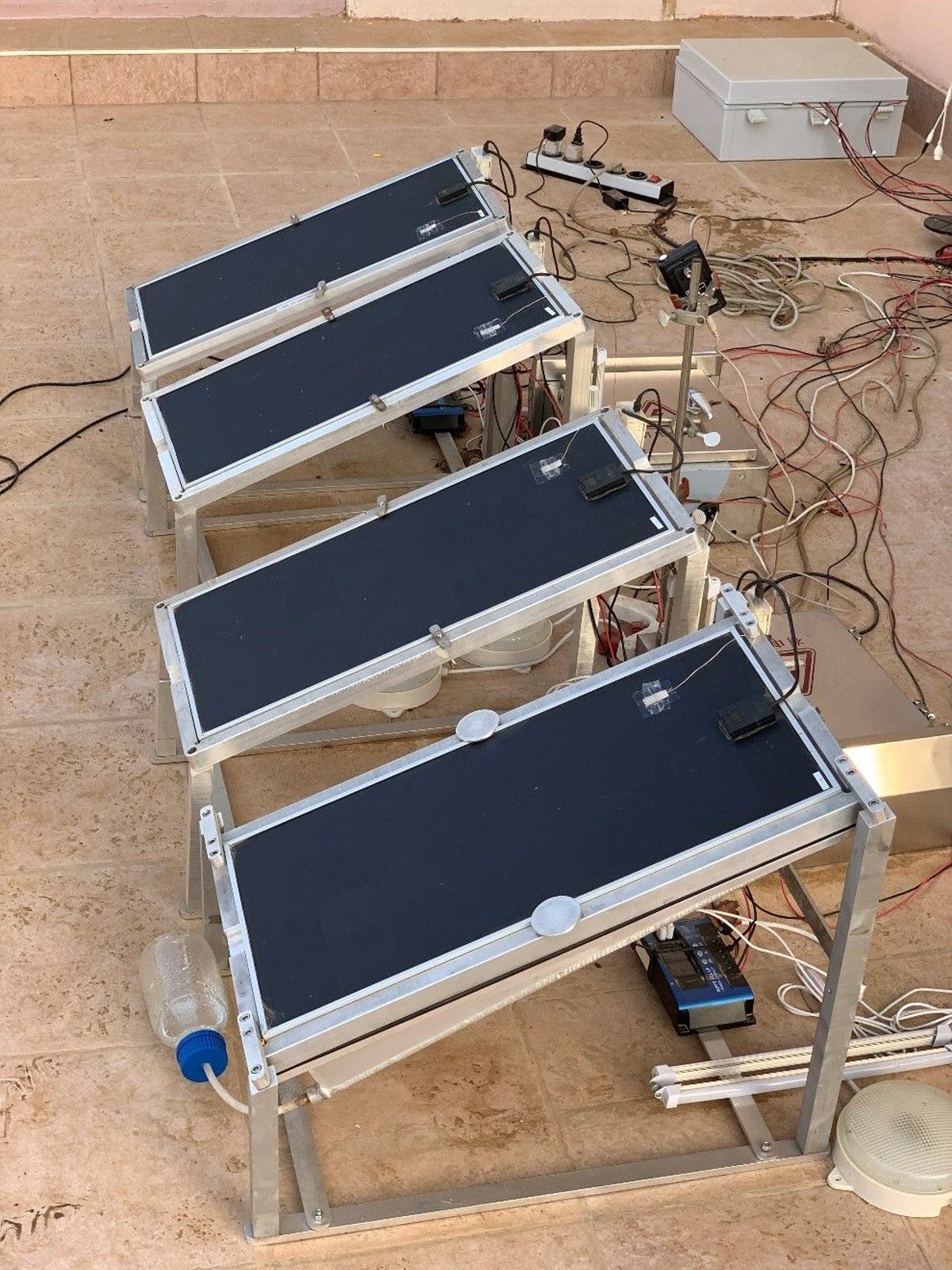
The team's prototype photovoltaic panels.
Renyuan Li
Approximately the size of a classroom desk, the solar panel they used generated a total of 1,519 watt-hours of electricity, which, for context, is around enough to drive a Tesla seven miles. It also created about two liters of water from air.
Those two liters were used to irrigate 60 water spinach seeds planted in a plastic box. According to the researchers, 57 out of 60 sprouted and grew to a regular 7 inches (18 centimeters). Next, Wang and colleagues intend to scale up their model so it can produce even more electricity and water content.
The crops watered by the water vapor-based droplets.
Renyuan Li
"A fraction of the world's population still doesn't have access to clean water or green power, and many of them live in rural areas with arid or semi-arid climate," Wang said. "Our design makes water out of air using clean energy that would've been wasted and is suitable for decentralized, small-scale farms in remote places like deserts and oceanic islands."
Apple google and samsung may have exciting smartwatch skroutz apple google and samsung may have exciting smartwatch for seniors apple google and samsung may have exciting smartwatch huawei apple google and samsung may have exciting meaning apple google and samsung may have exciting events apple google and samsung may discontinue apple google and samsung partnership facebook apple google
Apple, Google and Samsung May Have Exciting Smartwatch Plans for 2022
Apple, Google and Samsung May Have Exciting Smartwatch Plans for 2022
Smartwatches have existed for years, but brands like Apple, Google, Samsung and Fitbit might have major changes in store for 2022. We could see a new type of Apple Watch designed for extreme sports, while Google could release its first consumer smartwatch. Fitbit, which Google owns, might introduce its first smartwatch powered by Google's software instead of its own. That's if the rumors and reports that have emerged so far turn out to be true.
A Pew Research Report from 2020 says one in five Americans use a smartwatch or fitness tracker, while Counterpoint Research's data says the smartwatch industry grew by 24% year-over-year in 2021. With that in mind, it wouldn't be surprising to see companies like Apple, Google, Samsung and others further their wearable tech ambitions this year.
Here's a look at the most interesting rumored smartwatches we're hoping to see this year.
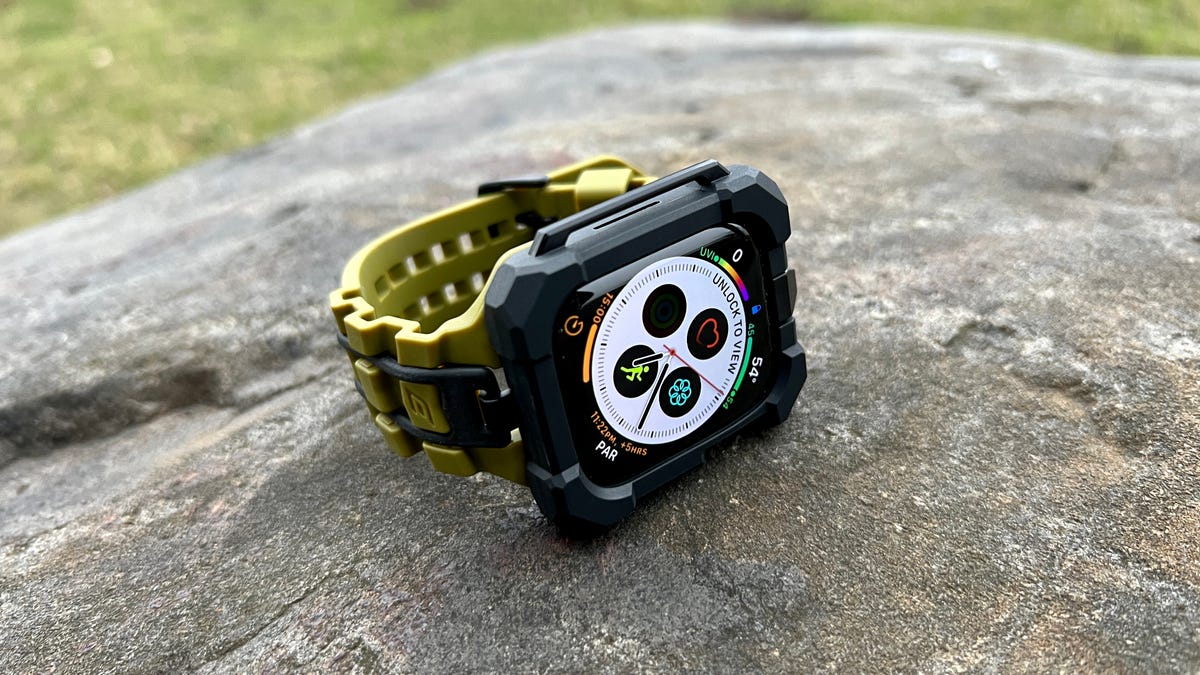
Previous iterations of Apple Watch got a special version.
David Carnoy/CNET
Apple Watch Explorer Edition
Apple might add a new rugged to its smartwatch lineup this year known as the Explorer Edition, according to Bloomberg. This would be a more rugged version of the Apple Watch geared toward those who engage in outdoor activities and extreme sports, the report says. It's expected to have the same functionality as Apple's regular smartwatches, but with more impact protection similar to Casio's G-Shock watches.
The watch is sometimes referred to as the "Explorer Edition" inside Apple, according to the report, but it's unclear if the product would go by that name. Bloomberg previously said the new rugged Apple Watch could arrive in 2022, so there's a chance we might see it during Apple's annual fall product event. Apple already began taking a step in this direction by making the Apple Watch Series 7's front crystal more durable.
I'm not the target audience for a watch like this, but I'm still excited to see what Apple's take on the rugged smartwatch could look like. There's an opportunity for Apple to reach more than just extreme athletes with a more durable smartwatch. A rugged Apple Watch could also be ideal for those with physically demanding occupations, such as construction workers, brick masons, landscapers and mechanics.
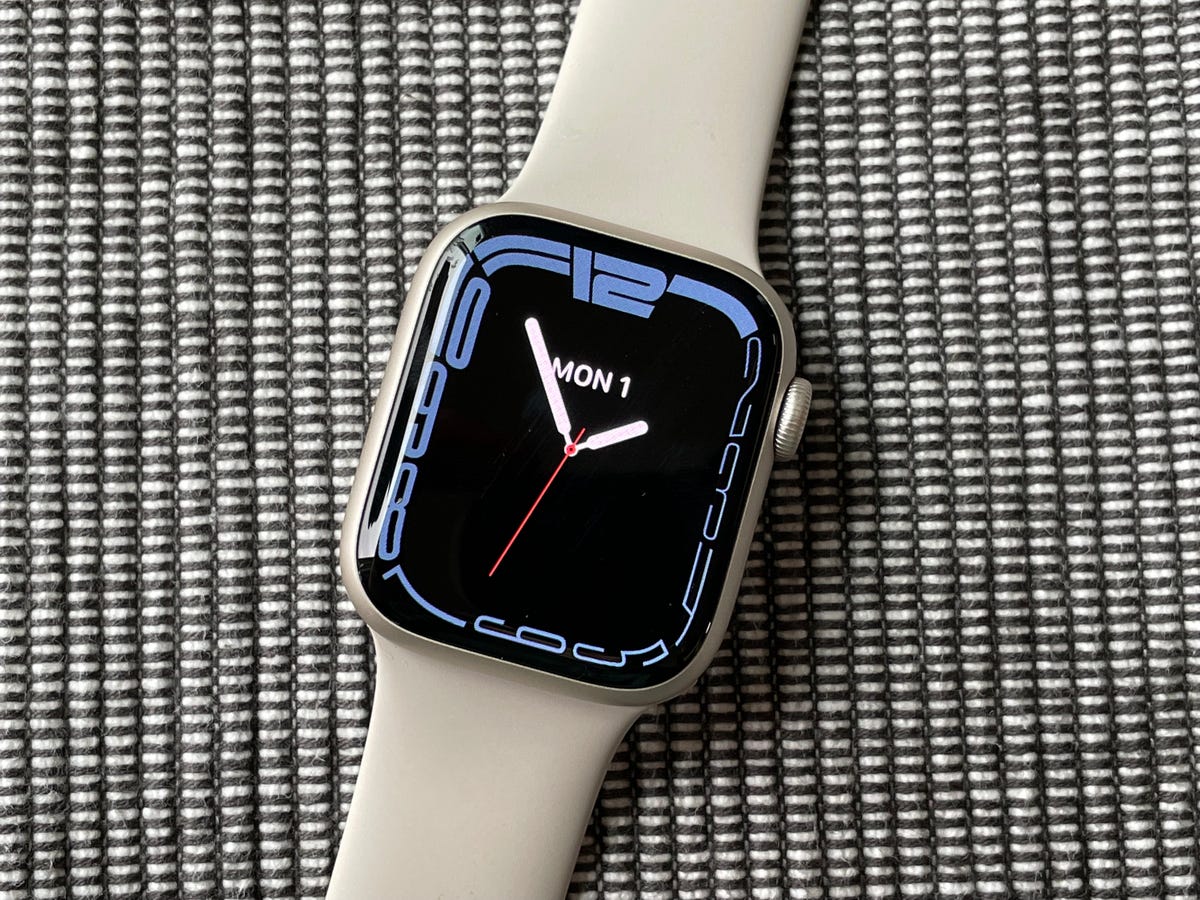
The Apple Watch Series 7 debuted a slightly larger Apple Watch screen over previous years.
Lexy Savvides/CNET
Apple Watch Series 8
There's also the Apple Watch Series 8, which is expected to debut this fall in typical Apple fashion. The biggest upgrade will likely be the addition of a body temperature sensor, according to Bloomberg and The Wall Street Journal. The thermometer might be designed to help wearers with fertility planning, reports from the Journal and Bloomberg indicate. Adding the ability to measure temperature would also help Apple catch up to other wellness trackers from Oura and Fitbit in this regard.
But Apple's more significant health-tracking updates -- like glucose and blood pressure monitoring -- are still expected to be years away, according to the reports. Apple's blood pressure monitoring technology likely won't be ready for the Apple Watch until 2024 at the earliest, and Apple hasn't even assigned a target launch window for blood sugar readings, according to a recent Bloomberg report. That makes me believe the Series 8 might be another incremental upgrade with processing and design improvements.
Still, I'm looking forward to learning how Apple would incorporate temperature sensing into the Apple Watch's suite of health features, if at all. Otherwise, I'm hoping to see longer battery life, more detailed sleep tracking and metrics that focus on recovering from workouts in the next Apple Watch.
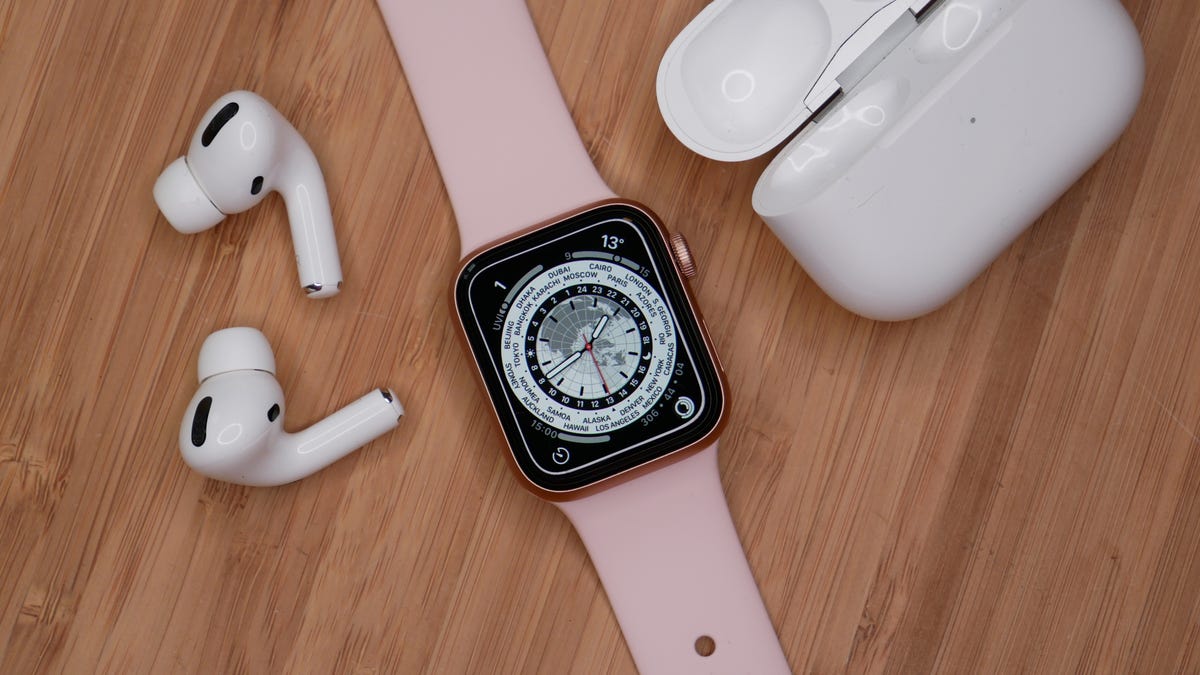
The Apple Watch SE debuted in 2020 and could get an update in 2022.
Lexy Savvides/CNET
Apple Watch SE 2
While the rumored Apple Watch Series 8 will likely demand much of the attention this fall, I'm personally more excited about a next-generation Apple Watch SE. The main differences between Apple's flagship watches and the SE usually involve sophisticated health tracking features -- such as blood oxygen saturation and the ability to take an ECG. But the Apple Watch SE still has most of the Apple Watch's most important features for $120 less than the Series 7, making it feel like the right model for most people. Such features include activity tracking, fall detection, irregular heart rate notifications, Apple Pay support and iPhone notifications.
Apple hasn't released a new Apple Watch SE since 2020, so I'm hoping to see an update this year. We don't know much about what to expect from the next Apple Watch SE, but a June 2021 Bloomberg report said a new version may arrive later this year. Based on Apple's previous releases, a newer processor, some design tweaks and new color options seem like plausible additions. But this is just speculation based on Apple's previous launches.
The SE's lower price means its functionality will be more limited than Apple's next flagship watch. Aside from the absence of those health features mentioned above, the current SE also has a smaller screen than the Series 7, lacks an always-on display and doesn't charge as quickly.
If Apple brings any of these features to the next-generation SE, I'm hoping it's the always-on display. Having a screen capable of staying on even when the watch is idle makes the Apple Watch much more useful as a timepiece. It's one of the few features I find myself missing in everyday use when switching between Apple's high-end watch and the SE. Apple could still distinguish the Series 8 from the SE with its wider selection of health features and larger screen. Since Apple might discontinue the $199 Apple Watch Series 3 soon, a new SE would round out Apple's lineup with a new budget-friendly option.
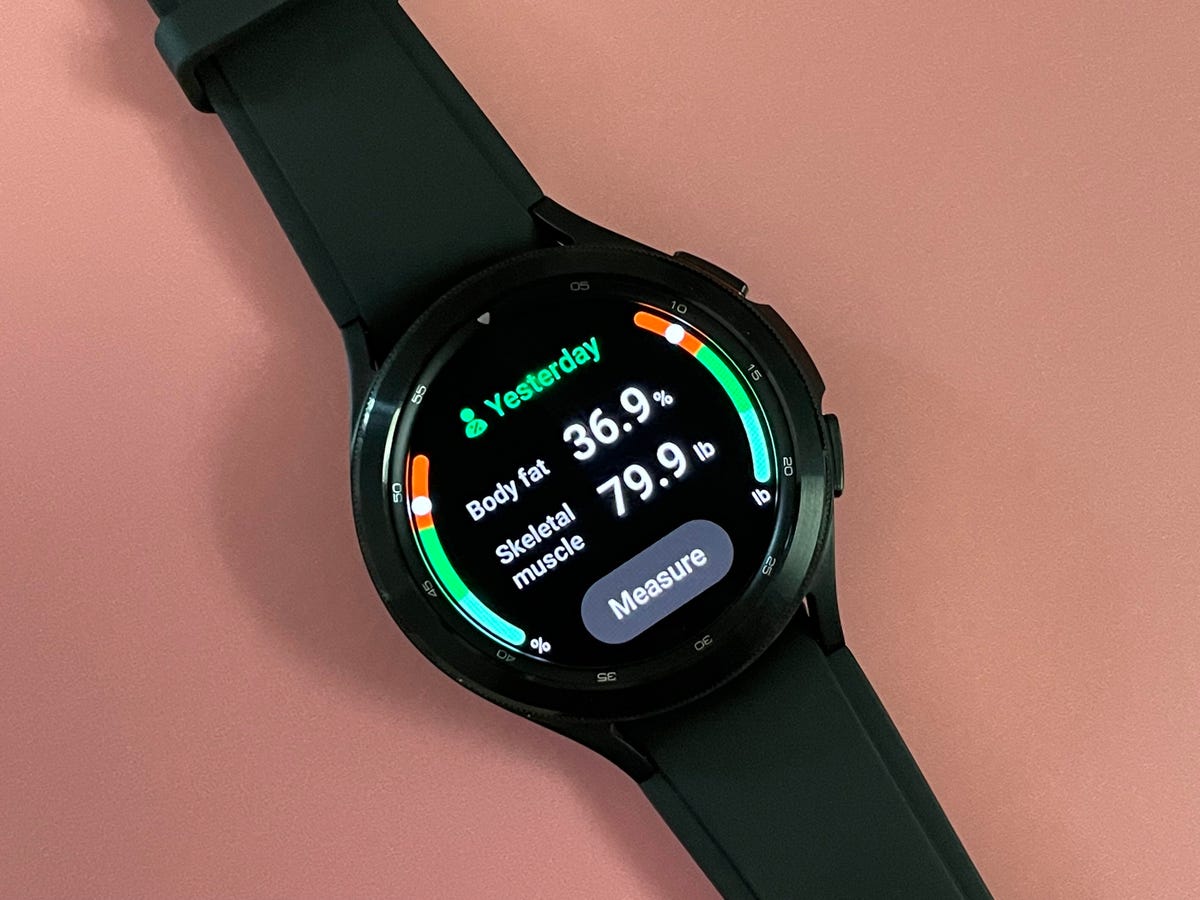
Samsung's Galaxy Watch 4.
Scott Stein/CNET
Samsung Galaxy Watch 5
Samsung's Galaxy Watch is one of the best smartwatches available for Android device owners, and rumors suggest a new Galaxy Watch 5 could be coming this year. It'll likely have a round screen and Google's Wear OS software just like the Galaxy Watch 4, but with a bigger battery and a temperature sensor. That's according to rumors from blog SamMobile, which claims to have found the device's battery in a regulatory filing, and Korean outlet ETNews.
These rumored upgrades suggest the Galaxy Watch 5 may be a refinement of the Watch 4 rather than a dramatic upgrade. But considering the Galaxy Watch 4 already does a lot of things right, from its smooth performance and vibrant screen to its wide array of health features, I'm fine with that.
One of CNET's biggest criticisms was the watch's battery life, and it sounds like the Galaxy Watch 5 might address this shortcoming. The bigger update we're hoping to see, however, is tighter integration with Google's apps and services. Such a change could give the Galaxy Watch 5 a more seamless Android experience, rather than feeling split between Google and Samsung's ecosystems.
A rendering reportedly showing what the Google Pixel Watch could look like based on leaks obtained by Jon Prosser. The image is in Prosser's video about the Pixel Watch on the YouTube channel Front Page Tech.
Jon Prosser/Front Page Tech
Google Pixel Watch
Google owns Fitbit and makes software for Android-friendly smartwatches, but it doesn't have a smartwatch of its own. That could all change this year as Google is expected to release its first consumer smartwatch, according to reports from Insider and YouTuber Jon Prosser.
Details on the watch are scarce, but Prosser shared purportedly leaked marketing materials indicating it could have a round design. Considering other Wear OS watches are also round, it's not much of a surprise. An old report from German blog WinFuture also suggests the Pixel Watch could come in three different versions. Insider says we can also expect heart rate monitoring and basic health tracking features.
At a higher level, I'm hoping Google's smartwatch takes a page from its Pixel phones. Google has made its mobile devices stand out by giving them clever software features that are either exclusive to Pixel phones, or arrive on Pixel devices before trickling down to other Android devices. Google has an opportunity to do the same for smartwatches, potentially creating a blueprint for what the Android smartwatch experience should be like.
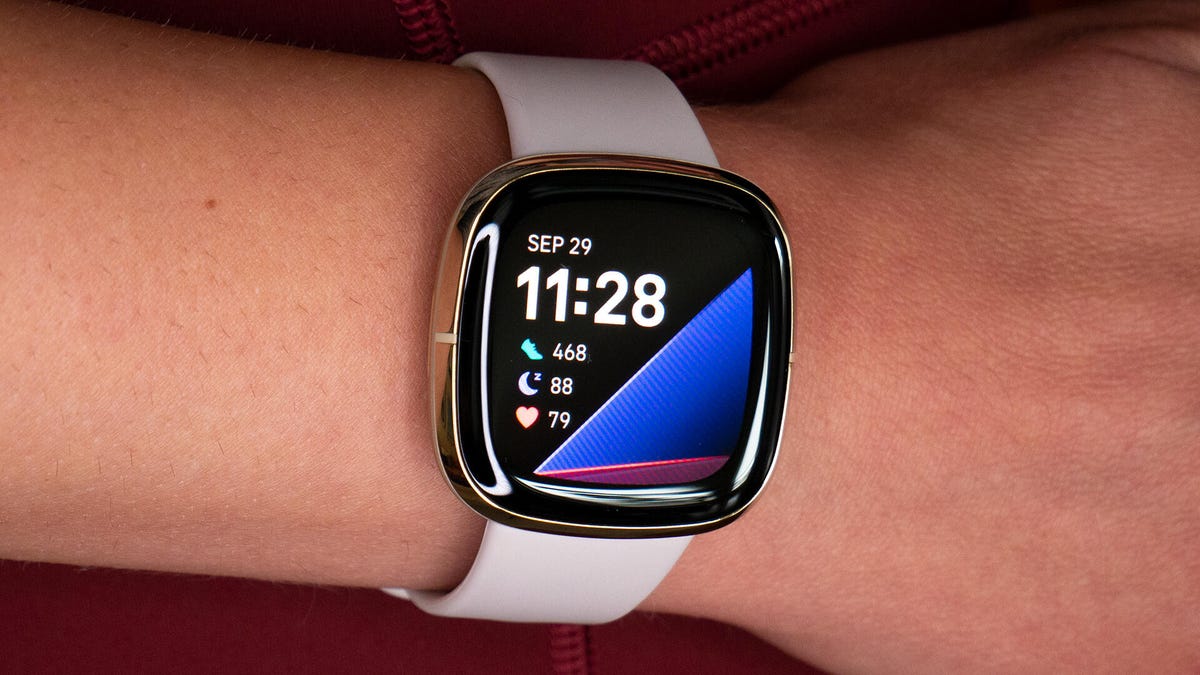
The Fitbit Sense.
Lexy Savvides/CNET
Fitbit's Wear OS Watch
Fitbit is working on a new premium smartwatch powered by Google and Samsung's new Wear OS software, CNET's Scott Stein reported last year. It'll likely have high-end features that might even be an upgrade from the Fitbit Sense, the company's most expensive watch, along with cellular connectivity and Google's apps.
It would be a big step forward for Fitbit, which currently sells smartwatches that run its own Fitbit OS software. While I've always appreciated Fitbit's wide selection of health features, detailed sleep tracking and long battery life, I've always felt its software could use some work. The experience doesn't feel as polished as the software on watches from Apple and Samsung, and there aren't as many apps. But that could all change with Wear OS.
Yet Fitbit might not be completely abandoning its Fitbit OS either. A next-generation version of the Fitbit Versa and Fitbit Sense watch may be in the works according to 9to5Google, which wouldn't run on Wear OS.
Only Apple, Samsung and Fitbit truly know what products are in their respective pipelines. But whatever their plans may be, health monitoring will likely continue to be a big focus for the smartwatch industry at large. Current smartwatches can already track an assortment of data points about our bodies, from how much time we spent asleep to our resting heart rate and blood oxygen saturation. Experts believe making better sense of such data is a big part of where wearable devices are going next.
§
What's happening
The Apple Watch is an excellent smartwatch and fitness tracker, but I'd like to see more wellness tools, longer battery life and additional uses for its U1 chip.
Why it matters
Apple is a leader in the wearables market, but competitors like Fitbit and Oura are ahead in certain areas.
What's next
Apple is expected to announce new Apple Watch models in the fall.
The Apple Watch did little more than send iPhone alerts to your wrist when it launched in 2015. Now, roughly seven years later, it's evolved into a powerful fitness tracker and communication device. That said, there are plenty of ways Apple could improve its smartwatch.
While the Apple Watch's wide selection of workouts, intuitive software and addictive Activity Rings have made it my favorite fitness tracker, I often find myself wanting more. Other gadget-makers, like Oura and Fitbit, are outpacing Apple in certain areas, particularly when it comes to workout recovery. It's time for Apple to catch up, and I'm hoping its next smartwatch helps the company get there.
Apple typically releases new Apple Watch models in the fall. But we got a preview of the new WatchOS 9 software coming to the Apple Watch Series 4 and later at Apple's Worldwide Developer Conference in June. Here's what else I'd like to see.
The Apple Watch Series 7 can charge faster, but I also want longer battery life.
Lisa Eadicicco/CNET
Longer battery life
Battery life has long been the Apple Watch's Achilles' heel. While the Apple Watch can usually get me through about a day and a half, Fitbit trackers and watches can last multiple days on a single charge. The Fitbit Sense, for example, can typically function for two to four days before requiring a charge, while the Fitbit Versa 3 has lasted up to six days according to CNET's reviews. (But remember that battery life will always vary depending on usage.)
I'd love to see multiday battery life from the Apple Watch, even if it's only three days. That would be enough to take my Apple Watch on a weekend trip without having to worry about plugging it in or packing a charger. It would also make the Apple Watch a more viable sleep tracker. I haven't been using the Apple Watch to track sleep very often because I find its exercise and activity tracking to be a more valuable use of its battery. But extending the amount of time between charges could change that.
To be fair, Apple has worked around this by improving the Apple Watch's charging speed with the Series 6 and 7. And that is helpful to some degree. If you wear your Apple Watch overnight, you can top it off during your morning routine and still have enough juice to make it through the day.
For most people, that's an adequate solution. But since I'm so obsessed with closing my Activity Rings, my Apple Watch remains strapped to my wrist for as long as I'm awake. I also rely on it to keep me on schedule as I'm getting ready to leave the house in the morning, so I'd rather have it sitting on my wrist than its charger.
Apple might have another battery workaround in its pipeline that could debut with the Apple Watch Seres 8. The new watch might include a new low power mode that would enable the Apple Watch to run some apps and features while preserving its battery, according to Bloomberg. It sounds like the new feature will allow for more functionality than the watch's current power reserve mode, which only shows the time. Bloomberg previously reported this feature would arrive in WatchOS 9, but there was no mention of it at WWDC.
Read More:A New Apple Watch SE Actually Sounds More Exciting Than the Series 8
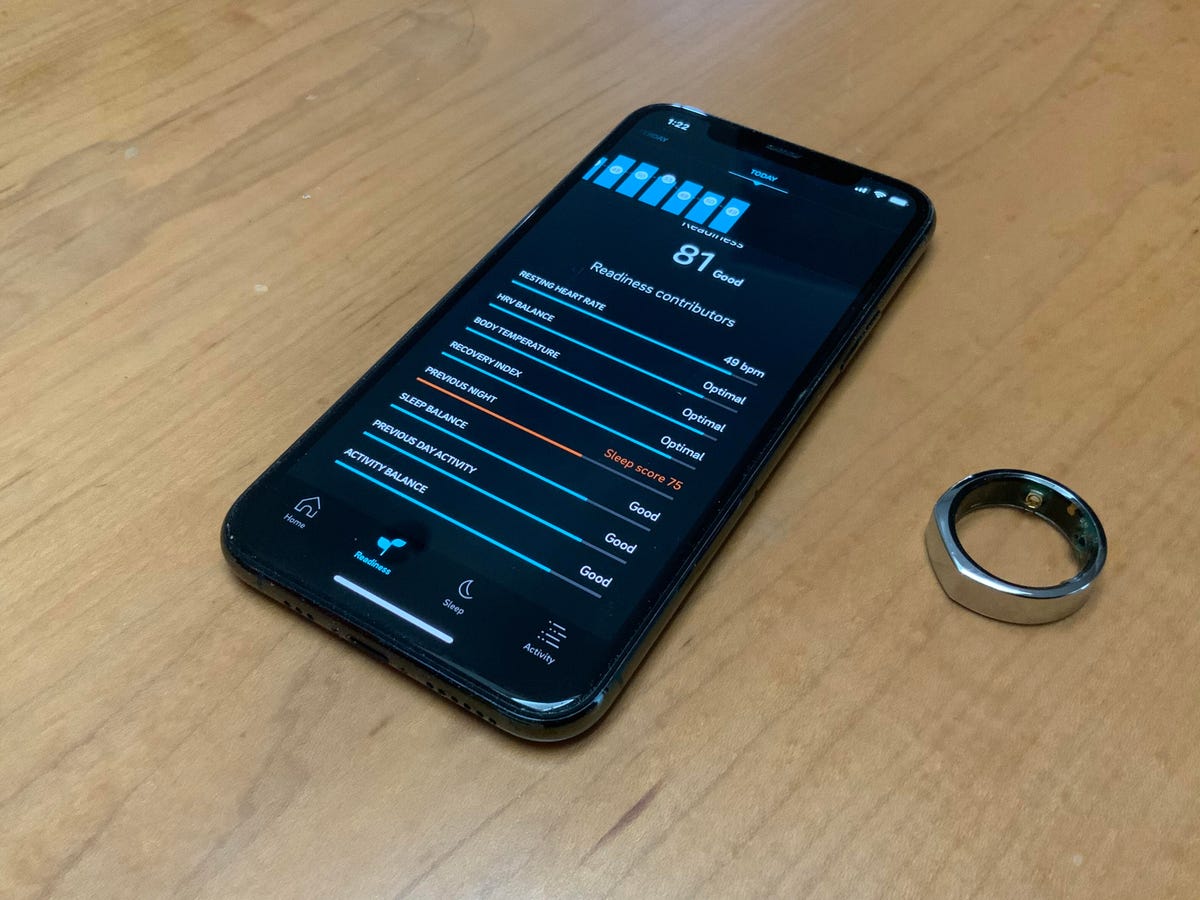
The Oura app's daily Readiness score, a combination of multiple measurements.
Scott Stein/CNET
Workout recovery features
My Apple Watch can tell me a lot of things, like how many active calories I've burned and long-term progress toward my fitness goals. But one thing it can't tell me is whether I need a rest day.
Since I'm usually very fixated on closing my Activity Rings, I sometimes push myself to work out when I probably need to take a break. There are also times when I know I can push myself harder, but I still opt for an easier workout. It would be great if the Apple Watch could help me navigate those decisions based on bodily signals, my recent activity and sleep.
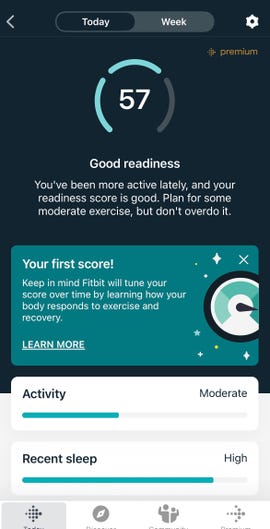
Fitbit's daily readiness score.
Screenshot by Lexy Savvides/CNET
Oura and Fitbit already offer metrics like this: readiness scores. As the name implies, a readiness score indicates whether your body is rested enough to tackle a heavy workout, or if you should skip the gym and rest up. Both Oura and Fitbit also offer advice and can adjust your fitness goals based on your score. For example, these apps might tell you to pay attention to how you're feeling and get some rest if you receive a low score. And if you receive a good or average score, they might suggest a moderate workout.
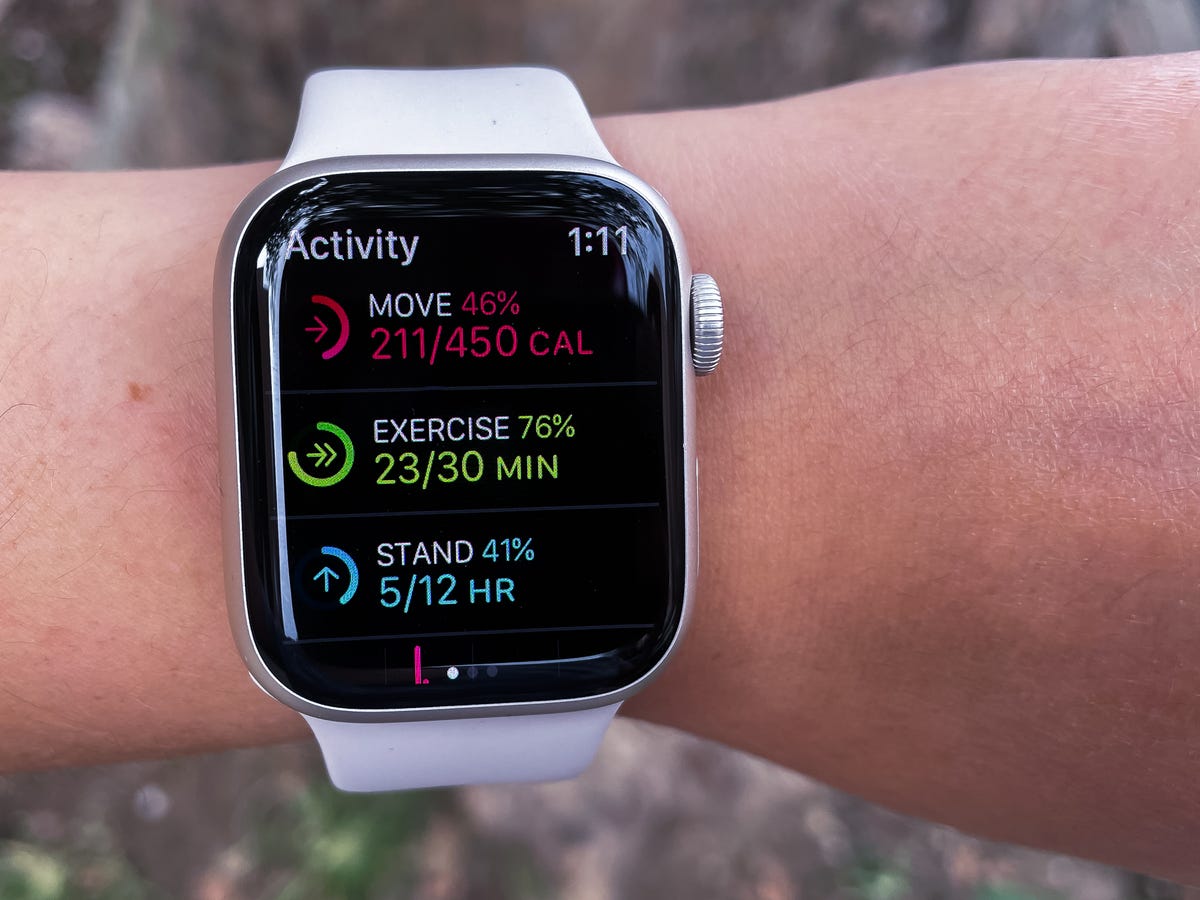
The Apple Watch can nudge you to move if you haven't made much progress toward closing your rings. It can also congratulate you when you've had a particularly active day. But it doesn't have a specific metric that prioritizes recovery like Oura and Fitbit's readiness scores. The Mindfulness app and Apple Fitness Plus' mediation programs certainly help, but it would be nice to see recovery built into the Apple Watch's goals and metrics in a meaningful way.
It sounds minor, but tips like this go a long way. On days when I'm feeling tired, a low readiness score along with a reminder to take it easy provides further validation that I don't need to commit to a full workout if I don't feel up to it. The Apple Watch's mindfulness reminders don't go far enough since they're easy to ignore. The readiness score usually correlates more closely with how I'm feeling based on my sleep and activity, so it feels more meaningful than a reminder to take a deep breath.
The Apple Watch's Workout app is getting new metrics in WatchOS 9 like heart rate zones and the ability to customize recovery intervals during a session, which could make it easier to manage your intensity during a workout. But the Apple Watch still won't have an alternative to the readiness scores found in apps from other fitness device makers.
The Apple Watch already does a good job motivating me to move. Now it just needs to remind me to rest.
Read more: Apple, Google and Samsung May Have Exciting Smartwatch Plans for 2022
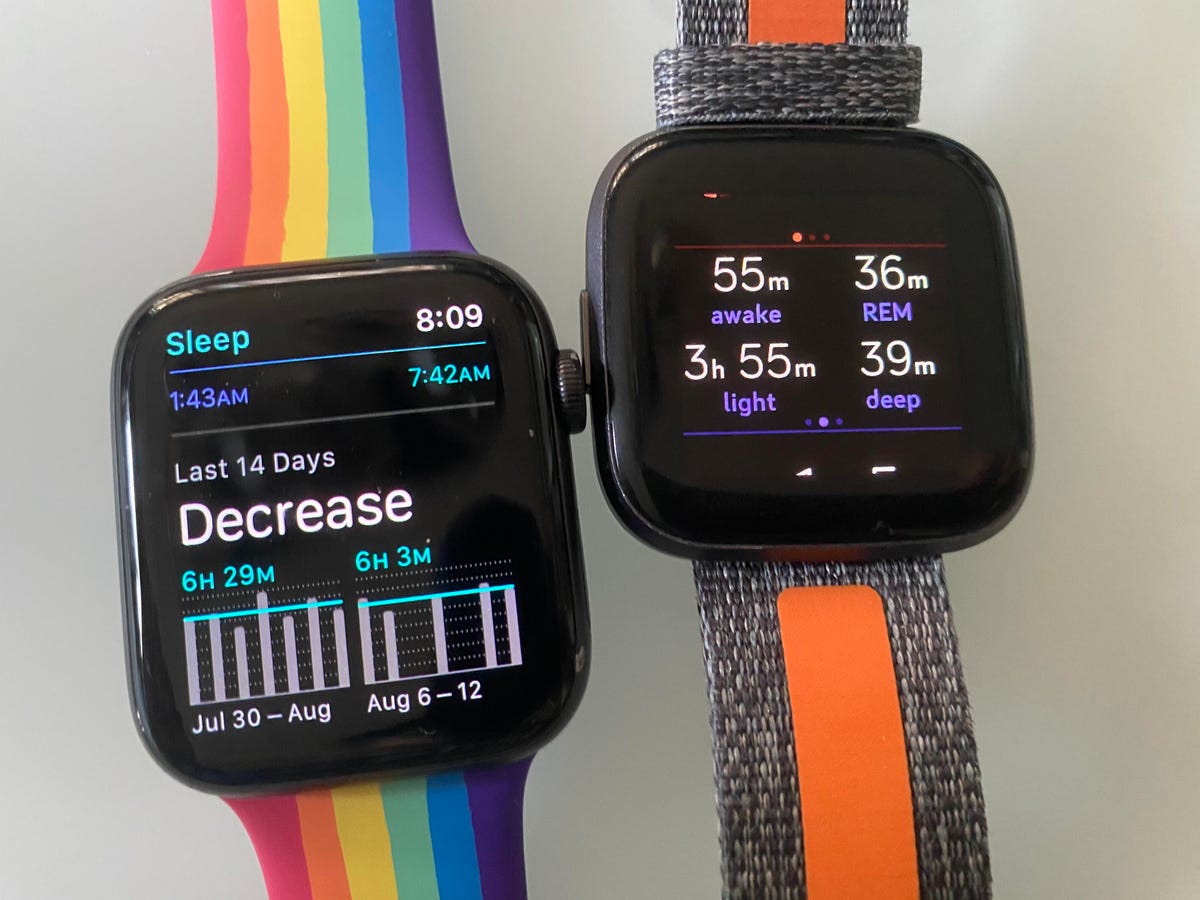
The Apple WatchOS 7 sleep app shows just overall sleep time, while devices like the Fitbit Versa 2 (right) show estimated light/deep and REM phases, plus a sleep score.
Scott Stein/CNET
A sleep score
The Apple Watch will get a big upgrade to its sleep tracking capabilities when WatchOS 9 arrives this fall. Apple is finally bringing the ability to measure different stages of sleep to the Apple Watch, a long-requested feature that other fitness devices from Oura and Fitbit have offered for years. While this is a major improvement, it looks like the Apple Watch still won't provide the level of sleep coaching found on other devices.
Oura , Fitbit, Samsung, Amazon and Withings all offer a sleep score that asses the quality of your sleep to help you make more sense of all the metrics these devices gather overnight. Similar to the previously mentioned recovery feature, these scores help me contextualize my sleep and help motivate me to get more rest when I need it. Samsung and Fitbit also offer sleep coaching programs that make observations about your sleeping patterns over a period of time to provide more targeted advice.
The Apple Watch can already record data about sleep duration, time spent in bed, sleeping pattern trends and respiratory rate. The addition of sleep stages is a big step toward making the Apple Watch feel like an even more well-rounded wellness device, but I'd still like to see more.
I'd love to change my Apple Watch's activity goals depending on the day.
Lisa Eadicicco/CNET
Different activity goals for specific days of the week
It's rare that any given day is exactly the same when it comes to exercise. Factors like how much sleep I got the night before, social plans, what I've eaten that day and whether I'm commuting to the office all impact how active I am. That's why I wish I could adjust the Apple Watch's goals according to each day of the week.
You can change your move, stand and exercise goals on the Apple Watch by opening the Activity app and tapping the Change Goals button. But there aren't any options for tailoring those goals to specific weekdays. I'd love to increase my move goal on days when I know I'll be heading into the office, since my commute involves a lot of walking.
Read more: Why Apple Should Launch an iPhone Subscription Plan
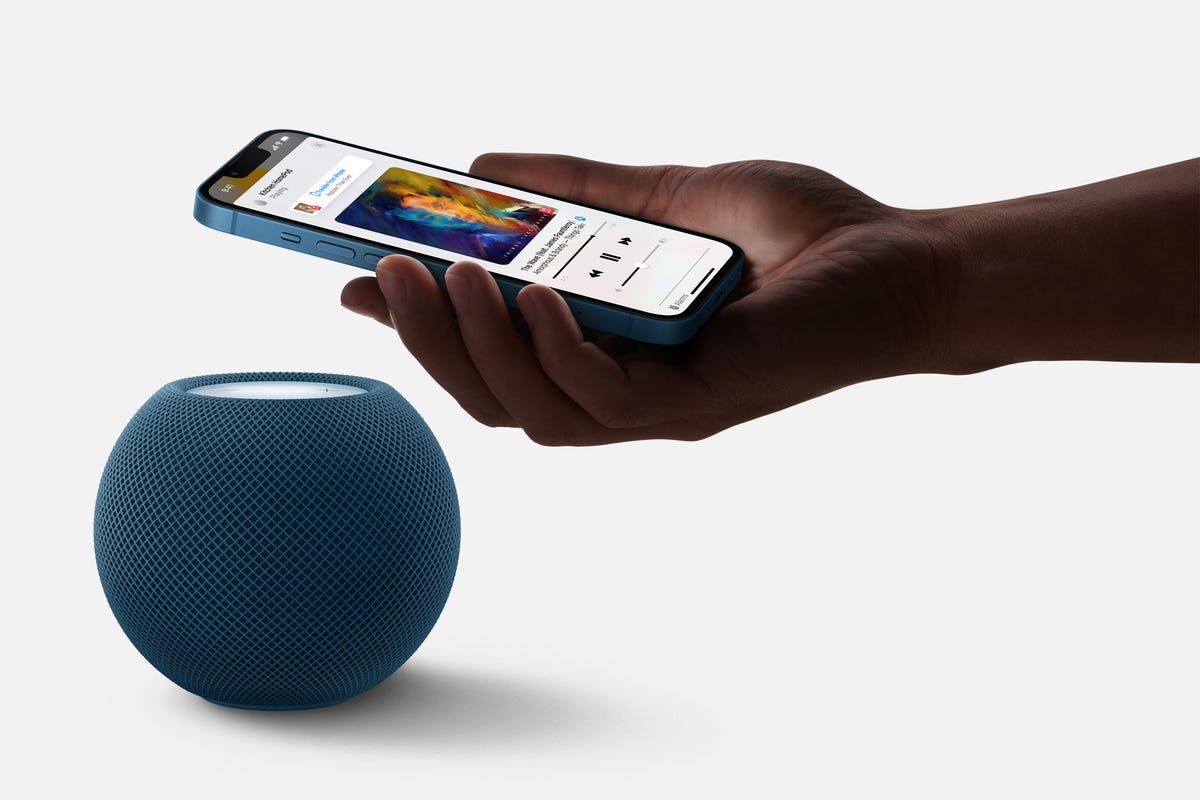
The HomePod Mini uses the U1 chip to improve the way audio is transferred between devices.
Apple
More uses for the U1 chip
The Apple Watch Series 6 and 7 as well as the iPhone 11, 12 and 13 have Apple's U1 ultra wideband chip. If you're not familiar, ultra wideband is a wireless short-range protocol that allows for precise location tracking. But don't think of it as an alternative for GPS. Rather, UWB is often used to help devices communicate with nearby gadgets within the same room. It makes Apple's AirDrop sharing feature work more quickly since it can locate other nearby iPhones with more precision.
Ultra wideband, or UWB, also improves the way the iPhone and Apple Watch models function as digital car keys. Compatible cars can recognize your device when it's nearby, meaning the car will unlock as you approach it rather than requiring you to hold your phone or Apple Watch near a key reader.
This is a promising start, but I'd love to see even more clever use cases for the U1 chip. In theory, UWB could give our devices another layer of intelligence that essentially enables nearby gadgets to react to your presence. My colleague Stephen Shankland came up with some ideas for how UWB could be practically useful when he wrote about the technology last year.
Imagine if your TV could automatically switch to the right Netflix profile once it recognizes that your phone or watch is nearby. Or what if your smart speaker only gave calendar alerts relevant to the people in the room? Apple seems to be moving in this direction as evidenced by the HomePod Mini, which can provide certain haptic effects when transferring audio to an UWB-equipped iPhone. I'm hoping to see even more functionality like this built into the Apple Watch.
We'll likely have to wait until the fall to learn what's in store for the next Apple Watch. Based on Apple's history, it seems plausible to expect routine upgrades like a new processor. But since the Series 7 felt more like a refinement of the Series 6 rather than a generational upgrade, I'm hoping to see bigger updates in the near future.
Tesla stock split to occur aug 24 after season tesla stock split to occur aug 24 2022 tesla stock split to occur aug 24 birthdays tesla stock split to occur in spanish tesla stock split to occur as a consequence did tesla stock split today tesla stock split predictions tesla stock split price tesla stock split news why is tesla stock dropping tesla stock chart
Tesla Stock Split to Occur Aug. 24 After Shareholders Approve Plan
Tesla Stock Split to Occur Aug. 24 After Shareholders Approve Plan
Tesla announced the date for its long-awaited stock split in an SEC filing Friday afternoon. Shareholders will receive two additional shares per each owned at market close on Aug. 24. Tesla shares will then trade at the split-adjusted price when the stock market opens on Aug. 25.
Thursday evening, Tesla shareholders completed the vote to authorize the 3-for-1 stock split at the company's annual shareholders meeting in Austin, Texas. The board of directors moved quickly to confirm the poll results and announce the stock split. Those who could not attend the meeting in person were able to cast their votes by proxy -- or online -- in the weeks leading up to the event.
Tesla (TSLA) closed at $864.51 on Friday. If the stock split were to occur at this price, it would result in an individual share price of $288.17, with three times as many shares in circulation.
Below we'll explain what a stock split is, how it affects investors and the share price, and why companies would be interested in pursuing a stock split.
What is a stock split?
A stock split divides existing shares into smaller pieces for greater accessibility. This causes the total share count to go up and the stock price to go down. You can picture a stock split as someone cutting a freshly made pizza; cutting the pizza into slices doesn't change anything fundamentally, it just makes the pizza easier to share and eat.
In other words, consider the 3-to-1 stock split in regard to a stock priced at $300. If you owned one share of the company, on the day of the stock split, that one $300 share would turn into three $100 shares.
How do stock splits affect options?
Options are affected the same way shares are, assuming they expire after the day of the split. For example, if you have a $900 strike call and a 3-to-1 split takes effect, you'd end up with three $300 strike calls. This scenario gives you more flexibility in your choice to exercise or sell.
Why do companies split their stock?
A company may issue a stock split for many strategic reasons. Most often, a company foresees major growth on the horizon and it wants to keep shares at an accessible price for retail investors. The stock also becomes more accessible to employees who receive stock-based compensation, like they do at Tesla.
There can be other strategic goals as well. For instance, the Dow Jones Industrial Average, or Dow, is a prominent stock index that's price-weighted. Because stock price directly affects the weighting in this index, it's a component considered for acceptance into the Dow. Companies with high share prices may not be admitted if they would disrupt the weighting too greatly.
Stock splits shouldn't be confused with public offerings of stock, where new stocks are issued by the company for sale to the public to raise money to support the business.
Do stock splits raise the stock price?
Fundamentally, a stock split shouldn't have an effect on the stock price. Nothing really changes, though research from Bank of America does suggest that companies that split their stock perform roughly 16% better than other companies in the 12 months following a split, according to Reuters.
However, this could be an indirect correlation and may be related in part or in full to the company's growth and other factors. Stock splits generally signal that the company is growing and confident. But those who trade stock and options often take advantage of the split environment for trading, which can create a lot of volatility in the markets before and after the split.
How will Tesla's stock split?
For this stock split, Tesla and its shareholders will have to take a few extra steps compared with last time, when the board simply announced its decision on Aug. 11, 2020, and swiftly split the stock on Aug. 31, 2020.
Public companies are capped with respect to how many shares they're allowed to have in circulation, which is enforced by the SEC. Tesla is near its limit after the last split and public offering (in December 2020) and only has the bandwidth to issue a 2-to-1 split under current conditions without shareholder approval.
After that, the board of directors will vote to approve a stock split and likely announce it shortly after. The split will be completed by the issuance of a share dividend to stockholders. For example, in the 3-to-1 split, for each share you hold by the cutoff date, you'll be issued two more shares on the day of the split. It's important to note that this is a onetime share dividend, unlike recurring cash dividends that are familiar to many investors.
Thor love and thunder disney movies thor love and thunder playlist thor love and thunder disney wiki thor love and thunder on disney plus thor love and thunder to disney plus is thor love and thunder hit or flop thor love and thunder review thor love and thunder trailer thor love and thunder release date
Thor: Love and Thunder Hits Disney Plus on Sept. 8
Thor: Love and Thunder Hits Disney Plus on Sept. 8
Thor: Love and Thunder will land on Disney Plus on Thursday, Sept. 8, Disney said Monday, giving fans a chance to analyze those two post-credits scenes even more. The 29th Marvel Cinematic Universe movie came to theaters in July, and its streaming debut will be accompanied by a behind the scenes "Assembled" documentary.
Also coming to Disney's streaming service that day is episode 4 of She-Hulk: Attorney at Law, the eighth Disney Plus MCU TV series, so Marvel fans might want to budget a few hours.
Sept. 8 is Disney Plus Day, an annual virtual event where the company typically announces upcoming content.
Other notable additions that day include Obi-Wan Kenobi: A Jedi's Return, a behind-the-scenes documentary about the Star Wars series that finished up in June, a live-action remake of Pinocchio (not to be confused with the Guillermo del Toro stop-motion one coming to Netflix) and sing-along versions of Frozen and Frozen 2 (in case you and any kids around don't already know every lyric).
Also coming to the streaming service on Sept. 8 are Remembering, a short movie about a writer (played Captain Marvel's Brie Larson) who loses an idea; a new Simpsons short about Lisa; a Dancing with the Stars: The Pros' Most Memorable Dances clip show; and Tierra Incógnita (a series about teen whose parents vanish in a horror theme park).
We're getting Cars on the Road (a spinoff TV show based on the Pixar movies), the coming-of-age docu-series Growing Up and the National Geographic series Epic Adventures with Bertie Gregory.
Disney Plus subscribers who visit California's Disneyland, Florida's Disney World or Disneyland Paris will be able to get into those parks 30 minutes before regular opening, the company noted, so you can beat the lines for popular rides. You might be asked to prove that you're a subscriber by displaying the service's logged-in home screen on the app on your phone, so have it ready.
From Sept. 8 to 19, some AMC theaters will have $5 Disney Plus Day screenings of movies like Encanto, Rogue One, Thor: Ragnarok, Cars and Newsies, and you'll get a free poster for attending.
Ghostbusters afterlife ivan reitman late ghostbusters director reitman ivan reitman ghostbusters cameo in the movie ghostbusters director reitman crossword clue director reitman of ghostbusters ghostbusters 1984 ivan reitman ghostbusters afterlife ivan reitman jason reitman ghostbusters 2 ghostbusters director ivan ghostbusters director dies ghostbusters director crossword ghostbusters director paul
'Ghostbusters' Director Ivan Reitman Dies at 75
'Ghostbusters' Director Ivan Reitman Dies at 75
Ivan Reitman, legendary director and producer of the original Ghostbusters movies, has died at 75.
Reitman died in his sleep at his home in Montecito, California, on Saturday, his family confirmed to the Associated Press. The cause of death was not released.
"Our family is grieving the unexpected loss of a husband, father, and grandfather who taught us to always seek the magic in life," his children, director Jason Reitman, Catherine Reitman and Caroline Reitman said via a joint statement.
"We take comfort that his work as a filmmaker brought laughter and happiness to countless others around the world. While we mourn privately, we hope those who knew him through his films will remember him always."
Reitman was famous for directing 1984's Ghostbusters and its 1989 sequel. The original movie influenced popular culture for decades to come, its costumes cropping up in Stranger Things, and its theme song unmistakable. It was so successful it spawned a franchise, including the 2016 reboot of the same name and 2021's Ghostbusters: Afterlife, directed by Reitman's son, Jason.
Reitman was also known for directing Stripes (1981), Twins (1988) and Kindergarten Cop (1990).
Leave the generator take the lead leave the generator take the money leave the generator take the a train leave the generator takealot leave the generator discord leave the generator sparks leave the generator shop leave the gun take the cannoli bruno mars leave the door open when did ukraine leave the soviet union did kelly ripa leave the show
Leave the Generator, Take the Power Station
Leave the Generator, Take the Power Station
A new breed of large portable batteries that are encrusted with household outlets and USB ports are touted as the next generation of electric generators—even though they don't generate electricity at all. Call them "power stations."
Large parts of the United States are at risk of blackouts this summer, according to a report Wednesday by the North American Electric Reliability Corporation. Power stations are getting attention from people who want power away from the grid, whether planned or not, without the fuel, emissions and pull cord of a gas generator. If you can make the charge time work in your intended use scenario, these might be your modern alternative to a compact generator.
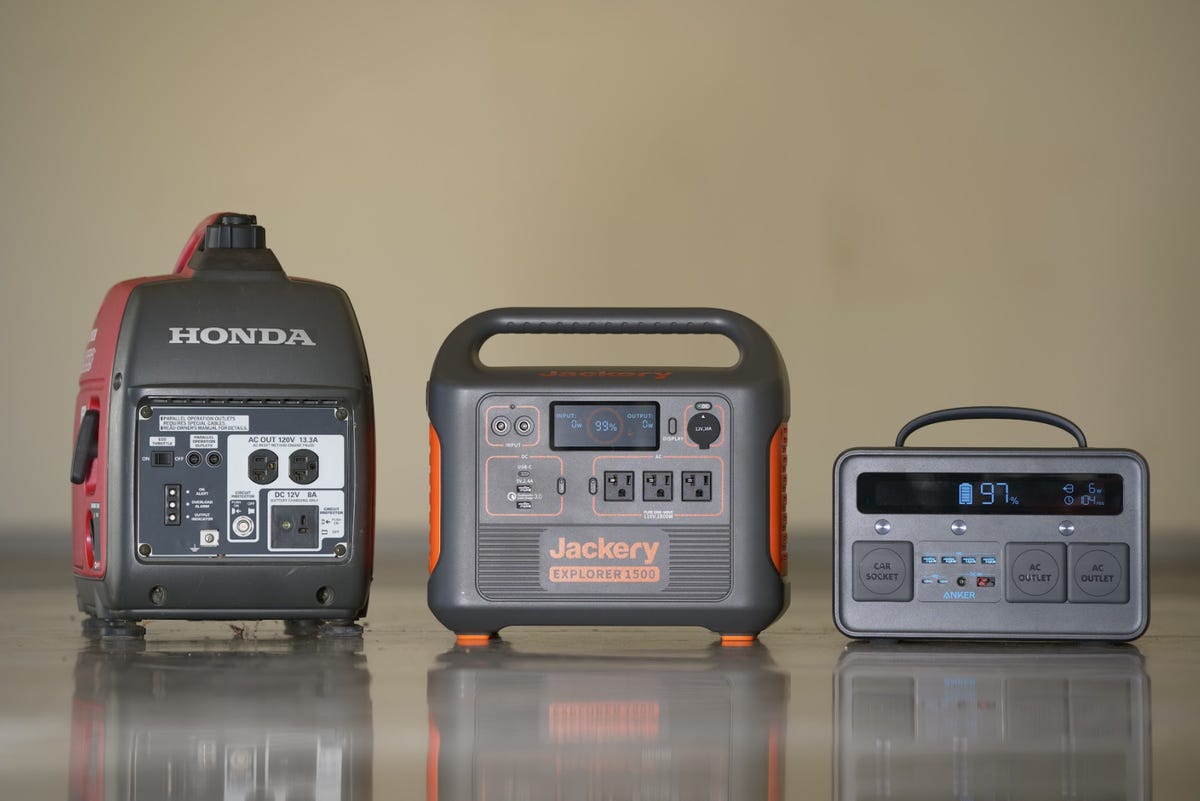
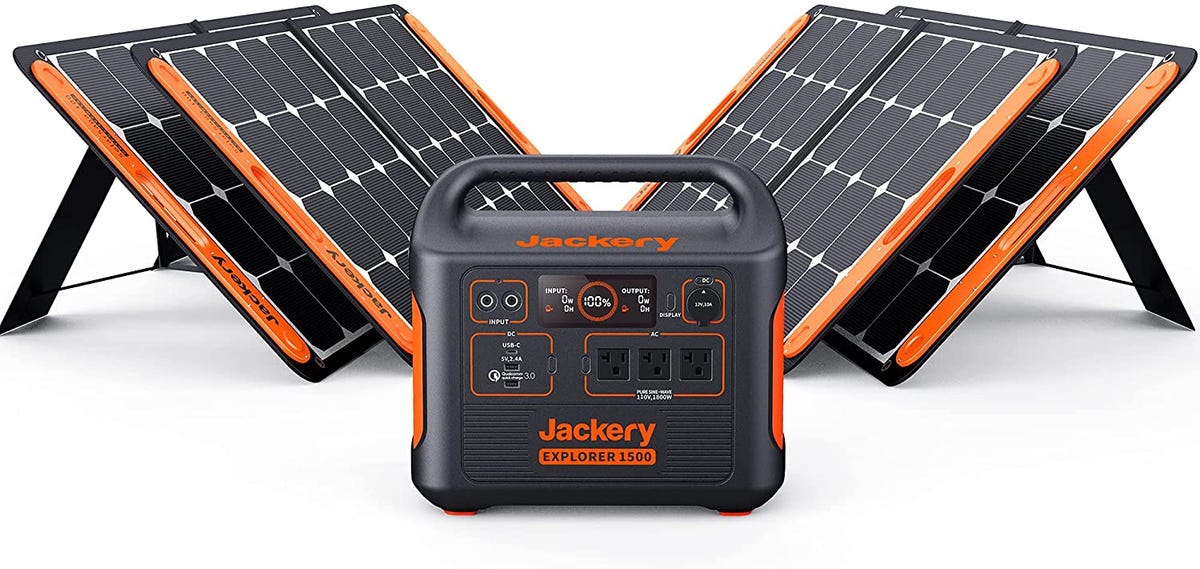
I spent some time with two excellent power station examples like the ones we continuously rank on CNET's best portable power stations list: The Jackery Explorer 1500 and the Anker PowerHouse II 800. The Jackery unit is about twice the capacity and twice the price of the Anker product and as such they're aimed at different use cases. A look at essential power station specs will make it clear what you need.
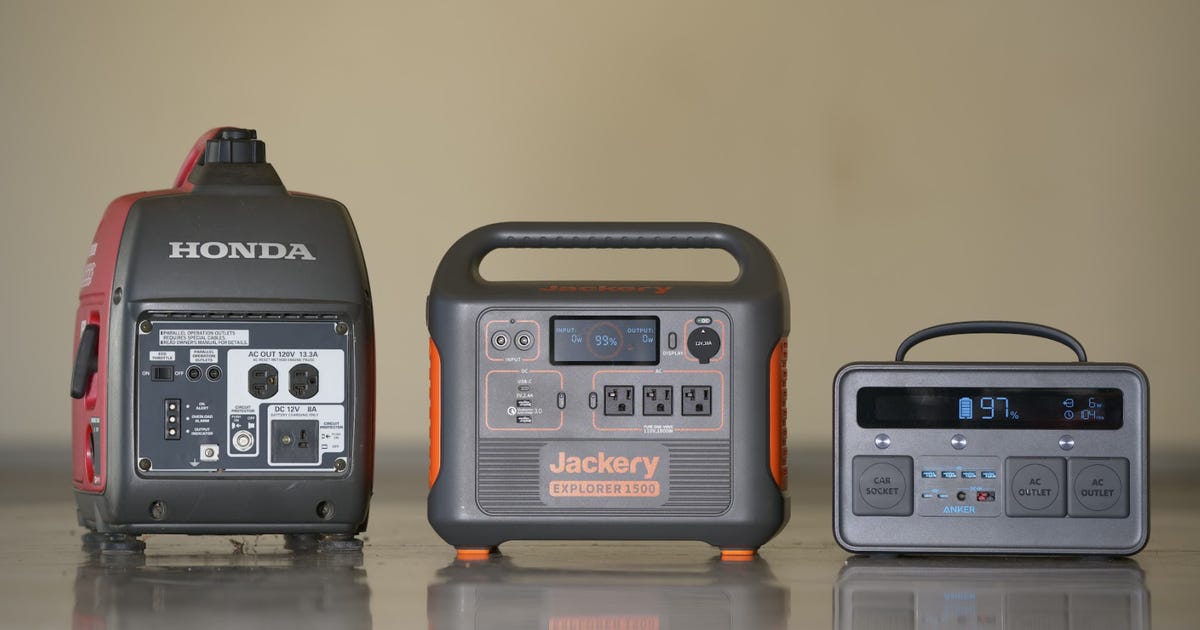
The venerable Honda EU2000i gas generator alongside the Jackery Explorer 1500 (center) and Anker PowerHouse II 880 (right) power stations.
Brian Cooley/CNET
Watt-hours (Wh) is the best single metric for the run time of a power station.A 500 watt-hour power station can deliver 500 watts for 1 hour or 1 watt for 500 hours or any combination thereof, with a caveat I'll explain next. Also, take the watt-hours rating of a power station and assume you'll only get 85% of that to be safe.
Here are some rough examples of household power needs so you can practice your watt-hour math:
55-inch LCD TV: 150 watts
Large laptop charger : 100 watts
100-watt equivalent LED light bulb: 8 watts
Desktop computer: 250 watts
Space heater: 750 or 1,500 watts
Wattage is the simpler sibling of watt-hours and represents the maximum wattage a power station can deliver on a sustained basis, regardless of how long it can deliver it. For example, a power station that can deliver 500 watts can easily power both the TV and laptop charger above but can't come close to powering the space heater and might strain to run the TV, desktop and laptop.
Add up the wattage of all the devices you need to run at once and make sure your power station can deliver that with a 15% cushion. Note that the power consumption of a device may be expressed in amps; multiply those by household current (115 volts) to get an approximation of watts.
Surge capacity: This is the momentary surge of power some devices need when starting, the most notorious example being refrigerators which can demand four to five times as much power to initially start their compressors as to run them. If you plan to run something with a good-size motor in it, verify its surge power demands and buy a power station that can cover that without shutting down to protect itself from overload.
Number of AC outlets is important because enough can keep you from needing a messy plug strip. Power stations excel at being a tidy package so it would be a shame if that's hampered by the lack of one more built-in outlet.
This 778 watt-hour Anker power station is compact but boasts of a lot of power outlets, from several forms of USB to automotive 12 volt and household outlets.
Amazon
True sine wave power refers to the quality of the power coming from the AC outlets. Power stations that deliver true sine wave power best approximate commercial utility current and can feed delicate electronics what they want to run right.
USB quick charge technology. While any USB port on a power station will deliver a basic charge, there are two main quick charge technologies — QC and iQ — also available on many of them. Having the kind that your phone or tablet can take advantage of will ensure a fast charge from your power station without having to plug a USB charger into it.
AC charge time. This is usually the fastest way to charge a power station, assuming you have grid power to connect the wall charger to. But expect the charge between power stations of similar watt hour capacity to be about the same.
Solar compatibility. Look into the solar charging ability of any power station you consider, especially if you intend to use the device as a camping accessory or as a backup for multiday blackouts. Solar charging can be a big equalizer between power stations and gas generators if you're concerned about long deployments.
Jackery offers several options to solar charge its Explorer 1500 power station: A single panel will charge the device in 16 hours, dual panels can do it in about eight hours and four panels in as little as four hours.
Amazon
Price per watt-hour is a good apples-to-apples comparison of value but should be very roughly $1 per watt hour of capacity MSRP.
Size and weight. Battery-based devices get heavy in a hurry when you scale up the watt-hour capacity, and no power station can avoid that rule of lithium-ion battery physics. Don't buy a massive power station you won't lug around when a smaller one could cover your needs and actually be used.
Warranty length. By their nature, power stations tend to sit a lot and get used a little, so a long warranty is key. Even 24 months may only cover a few uses.
Once you get your head wrapped around power station specs you may find that you don't need a gas generator at all.
Lenovo legion 16 inch laptop lenovo legion latest gaming laptop lenovo legion gaming laptop price new lenovo legion 2022 lenovo sn warranty check lenovo software update lenovo slim 7i
Lenovo's new Legion gaming laptops pack 16-inch, 240Hz and 1440p+ screens
Lenovo's new Legion gaming laptops pack 16-inch, 240Hz and 1440p+ screens
This story is part of CES, where CNET covers the latest news on the most incredible tech coming soon.
Lenovo's gaming laptops tend to get overlooked in the sea of flashing lights, probably because Lenovo is so overwhelmingly associated with work and its flagship ThinkPad line. But some of them are surprisingly good, and the line gets refreshed on a regular basis -- the last refresh was in May last year. This go-round, the Legion 5 series models get another boost with the 12th-gen Intel, Ryzen and Radeon 6000-series AMD and Nvidia CPUs and GPUs announced this week at CES 2022, among other tweaks.
The 16-inch Legion 5i Pro and 5 Pro flagships add what Lenovo calls "the world's first 16-inch laptop series with a WQHD+ up to 240Hz adaptive refresh rate" as a new option. (The "i" in the name indicates it's Intel-based and the absence of one represents the AMD model, though the designs are as similar as you can get given the different capabilities of the two platforms.) Now, that's a pretty specific first to claim, especially since the adaptive refresh (G-Sync) has until the end of July to start rolling out. Nevertheless, even as one of the first, that's a very nice option to have, especially since it's a pretty bright display with a bit better than basic HDR (DisplayHDR 400) and a peak brightness of 500 nits.
Richard Peterson/CNET
They don't get the top-end processors -- for instance the max Intel option is the i7-12700H and the best GPU is the GeForce RTX 3070 Ti -- but they do drive them pretty hard; it boosts to 165 watts for the GPU. But they take advantage of the new GPU/CPU power-shuffling technologies introduced by the three chip manufacturers to eke out some more speed.
The overhauled cooling system let Lenovo slim down the laptops, and to compensate for possible increased noise the new chassis is insulated to muffle it and intake air through the keyboard rather than hot air venting out through it. It also has a new four-zone lighting system. And a white version.
The step-down Legion 5 and 5i, also the same design, still use a traditional 15.6-inch screen up to a 1440p screen, but the laptops are thinner with an aluminum and magnesium alloy cover to make it feel less budgety. It supports up to the same levels of CPUs as the Pro models, but the GPUs max out at an RTX 3060. It also gains the new cooling system, the quieter TrueStrike keyboard trickles down from higher-end models, and it supports USB-C charging.
Lenovo's Legion Arena command center software does lag everyone else's, though; it's just now getting a game-launch screen that aggregates the games installed on your system with centralized access.
Xbox one s vs samsung vs sony vs oppo 4k blu ray xbox one s vs samsung vs sony vs oppo a5s xbox one s vs samsung vs sony vs lg xbox one s vs samsung vs sony 85 xbox one s vs samsung vs sony 75 xbox one s vs all digital xbox one s vs original xbox one steering wheel xbox one controller
Xbox One S vs. Samsung vs. Sony vs. Oppo: 4K Blu-ray player shootout
Xbox One S vs. Samsung vs. Sony vs. Oppo: 4K Blu-ray player shootout
Ever since the original PlayStation back in the '90s, game consoles have been at the cutting edge of playing optical discs. The DVD and Blu-ray formats both got a huge boost from Sony's machines.
With the latest optical format, 4K Blu-ray, it's Microsoft's turn to lead the pack. Sony decided to omit 4K disc support from its PlayStation 4 Pro, leaving the Xbox One S as the sole console capable of delivering the highest-quality home video under the sun. At 12 months of age, the $250 One S has grown into a fine console, and its inclusion of 4K UHD playback is one of its best features.
Meanwhile dedicated 4K Blu-ray players sell for around the same price or even more, and can do far less. So the question for people who want to watch 4K Blu-ray becomes: Is there any good reason to buy one of them instead of the One S?
To find out, I pitted the Xbox against three high-profile 4K Blu-ray players -- the Sony UBP-X800, the Samsung UBD-K8500 and the Oppo UDP-203 -- to see which presented the best performance for the money.
The interface
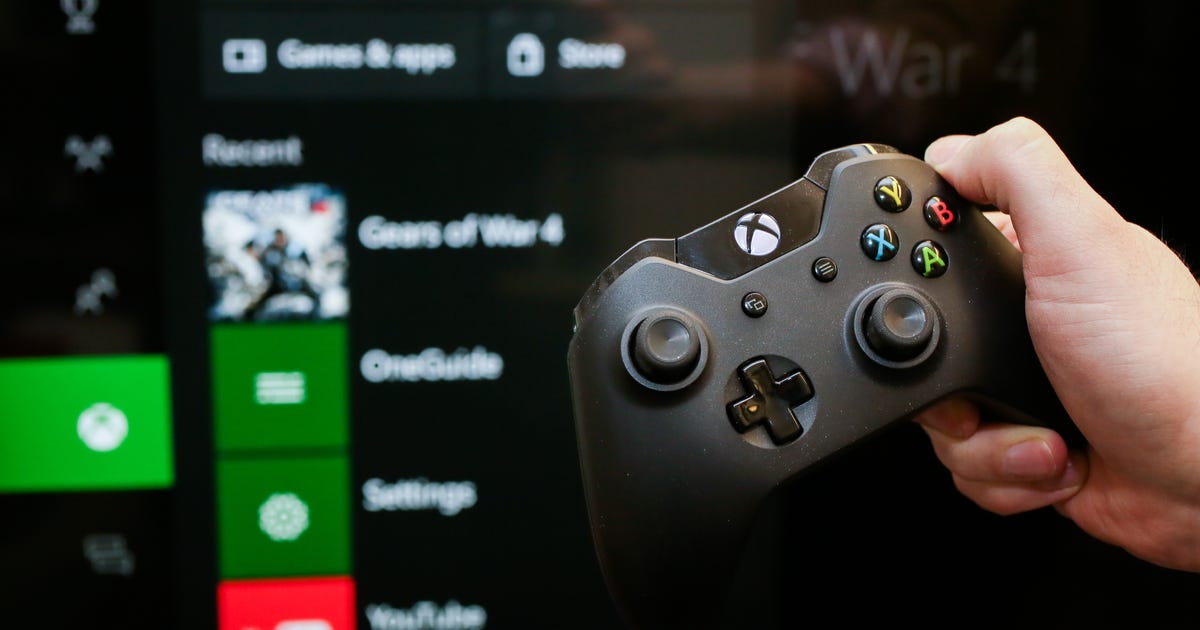
Pressing the center button on the Xbox One controller now takes you to a Guide sidebar, rather than the traditional home screen.
Sarah Tew/CNET
Despite the Xbox One's considerable power and capabilities, I consider its menu system a nightmare. The on-screen display is confused, convoluted and makes finding anything more difficult than before. And that's just games. As the Xbox is not a disc player first and foremost, you may have to burrow down to access the Blu-ray app.
Of the four 4K BD players I've tested so far, my favorite interface is the Sony. It puts content first, and lets you tailor your shortcuts so your favorites -- say Play Disc, Netflix and Pandora -- are right in front of you.
Operating speed
The Xbox One S is actually pretty fast when it comes to loading discs and streaming Netflix. While the 2016 Samsung UBD-K8500 is still the fastest I've seen at loading 4K discs, Microsoft's console is second fastest among the four. Sure, the Xbox is beaten in most of the other tests, but it only loses out by a couple of seconds each time. You probably wouldn't notice the difference in real-world use.
Loading times
Time to load (s)
Microsoft Xbox One S
Oppo UDP-203
Samsung UBD-K8500
Sony UBP-X800
Netflix (until menu)
10.01
N/A
7.64
4.26
'MI:III', player on, disc tray open
15.43
14.81
10.00
12.41
'Batman vs. Superman' UHD, player on, disc tray open
37.69
39.3
28.78
44.43
Image quality
While you may expect a dedicated player to produce a better picture than a game console, that wasn't the case. The Xbox One S passed all of the tests I threw at it -- whether DVD, Blu-ray or 4K disc. From everything I could see, it was just as good as the dedicated players. It was able to correctly replay film and video content from DVD and Blu-ray test discs well, without stuttering or leaving jaggies. And 4K high dynamic range (HDR) content popped in exactly the same way it did on the Samsung, Sony and Oppo players -- whether via streaming services or discs.
Be aware that if you want to stream HDR, only Netflix and Amazon are supported on the Xbox One S right now -- no YouTube or Vudu yet. By comparison, the Samsung only does Amazon HDR, while the Sony only has YouTube HDR.
Should you buy a dedicated player?
The Media Remote makes disc playback easier on the One S.
Sarah Tew/CNET
With similar speed and image quality across all of the players, why buy anything but the Xbox One S for 4K Blu-ray playback?
The main reason is if you watch a lot of discs. The interface of the Xbox One S muddles things and makes the process of playing stuff more annoying than a dedicated player. The $18 Media Remote is also worth the investment if you don't want to use the Xbox's game controller.
But that's pretty much it, and for most people the interface differences aren't worth paying extra to get a dedicated player. If you want to do any gaming at all (and even if you don't), the Xbox One S is worth buying over a dedicated player. It's capable, compact and comparatively fast. And until those other players go down in price, it's by far the best value in 4K Blu-ray playback.
Best TVs right now: The past year's best sets, all in one place.
Star Wars at 40: We celebrate the many ways the Force-filled sci-fi saga has impacted our lives.
This device turns your sweaty finger into a gadget definition this device turns your sweaty finger into a gadget to replace this device turns your sweaty finger into a circle this device turns your sweaty finger into cervix this device turns your sweaty betty this device turns your sweaty feet this device turns your spare this device turns your words this device turns sunlight into electric currents app store for this device
This device turns your sweaty finger into a gadget charger
This device turns your sweaty finger into a gadget charger
Scientists have come up with a device that harvests sweat from your fingertip to generate power. The flexible, thin strip wraps around the tip of a finger like a Band-Aid and converts chemicals found in human sweat into small amounts of electrical energy. Fingers constantly produce sweat, so the device can work without the wearer moving a muscle.
"By using the sweat on the fingertip -- which flows out naturally regardless of where you are or what you're doing -- this technology provides a net gain in energy with no effort from the user," said Joseph Wang, a professor of nanoengineering at UC San Diego and co-author of a paper describing the product, published Tuesday in the journal Joule.
It's common for self-powered wearable systems that rely on bioenergy harvesters to require excessive inputs of energy. But because this device doesn't require any physical input from the wearer to work, it's "a step forward to making wearables more practical, convenient and accessible for the everyday person," study co-author Lu Yin, a nanoengineering Ph.D. student at UC San Diego, said in a statement. UC San Diego researchers previously worked on temporary tattoos that turn sweat to power.
While the new product can produce power, it's not time to kick your tangly cords and finicky electrical outlets to the curb just yet. The device can potentially power lower-power electronics that operate in the milliwatt range, such as a wristwatch, but it's not yet suitable for continuously powering high-performance electronics such as smartphones, the researchers say.
"Our goal is to make this a practical device," Yin said. "We want to show that this is not just another cool thing that can generate a small amount of energy and then that's it. We can actually use the energy to power useful electronics such as sensors and displays."
Fingertips, each packed with more than a thousand sweat glands, can produce between 100 to 1,000 times more sweat than most other body parts. It might be hard to notice how sweaty they are, though, since the sweat typically evaporates from fingertips as soon as it comes out. This new device collects it before it can.
The device was built to be highly absorbent. First, sweat is absorbed and converted into energy by a padding of carbon foam electrodes. The electrodes have enzymes that trigger chemical reactions between lactate and oxygen molecules in sweat, generating electricity. There's also a chip underneath the electrodes made of piezoelectric material that generates more energy when pressed.
Electrical energy is stored in a small capacitor as a wearer sweats or presses on it. It can then be discharged to fuel low-powered devices.
As a subject slept for 10 hours with the device on a fingertip, the wearable collected 400 millijoules of energy, which is enough to provide 24 hours worth of power to an electronic wristwatch (but not a smartwatch). The researchers note that strapping devices to additional fingertips would generate even more energy. But I'm still processing the news about how many sweat glands are on ONE of my fingers, much less 10.