Samsung galaxy watch 5 all the fresh features of facebook samsung galaxy watch 5 all the fresh features of the ocean samsung galaxy watch 5 all the freshman samsung galaxy watch 5 all around haircut samsung galaxy watch 5 ally actions samsung galaxy watch deals samsung galaxy a53 5g
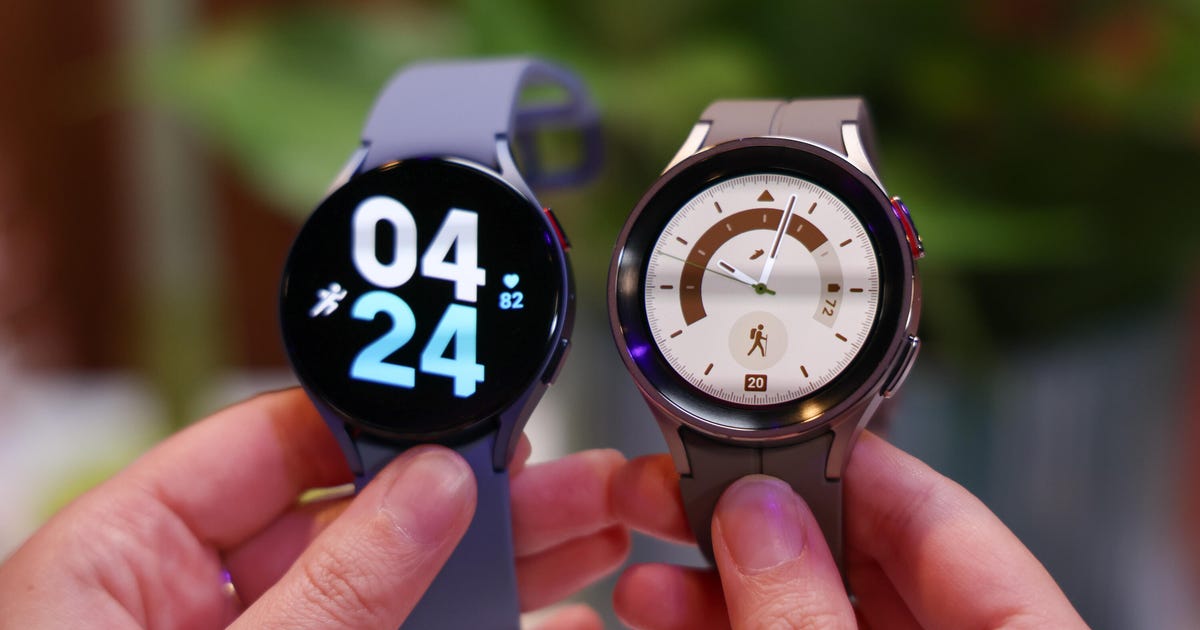
Samsung Galaxy Watch 5: All the Fresh Features, Including Bigger Battery, Bezel Redesign
What's happening
Samsung's newest watches, the Galaxy Watch 5 and Watch 5 Pro, are arriving Aug. 26. They feature better battery life and skin temperature sensors, and promise more durability.
Why it matters
Last year's Samsung watch was the debut of Google's new Wear OS, and smartwatches are in search of better battery life. But Google's Pixel Watch is also coming this fall.
What's next
Samsung's preorders for the watch start now, but stay tuned for our full review. Meanwhile, many more competing watches are expected later this year.
Samsung's Unpacked event gave us a glimpse of the the Galaxy Watch 5, its latest attempt to make the ultimate Android smartwatch following last year's Galaxy Watch 4. This time it's coming with a larger Pro model to go with it, with both models set for an Aug. 26 release along with Galaxy Buds 2 Pro, Galaxy Fold 4 and Flip 4. You can read our ongoing review of the Galaxy Watch 5 here.
Last year's watch served as the debut of Google's new Wear OS 3 -- which Samsung co-developed -- and while it wasn't perfect, it included an ambitious bunch of new health sensors that aimed to bring wrist-based bio-impedance and fat measurements to Samsung Health.
2022 is a whole new story. Google has the Pixel Watch arriving this fall, promising a blend of Fitbit and Google automatic smarts and design. Meanwhile, Samsung's new watches are promising longer battery life over last year, a skin temperature sensor and a supposedly more durable sapphire crystal for the watch face instead of Gorilla Glass. The Pro model's extra-beefy battery promises dayslong wear between charges, a trend that Apple's reported to follow on its next watch this fall.
Is the Watch 5 worth getting? Or, the Pro model? Or should you wait to see what the Pixel Watch is all about? Samsung's first out of the gate on this year's fall wave of watches, so let's break down what it's got. We can't compare others yet, because they're not here yet. But Samsung's latest watch model looks like a more modest upgrade compared to last year, with only a few notable changes to the equation.
Price: A wide range, with some discounts
Samsung's Bluetooth-only Watch 5 will start at $280 (£269, AU$495), with the LTE version starting at $330. But the bigger-battery titanium-cased Pro model starts at $450 (£394, AU$725), or $500 for the LTE version. Samsung's offering some trade-in discounts on preorders: $75 off the Watch 5, or $125 off the Pro if an "eligible" watch is traded in, along with a $50 credit for accessories. Other retailers may end up having sales and trade-in discounts, too.
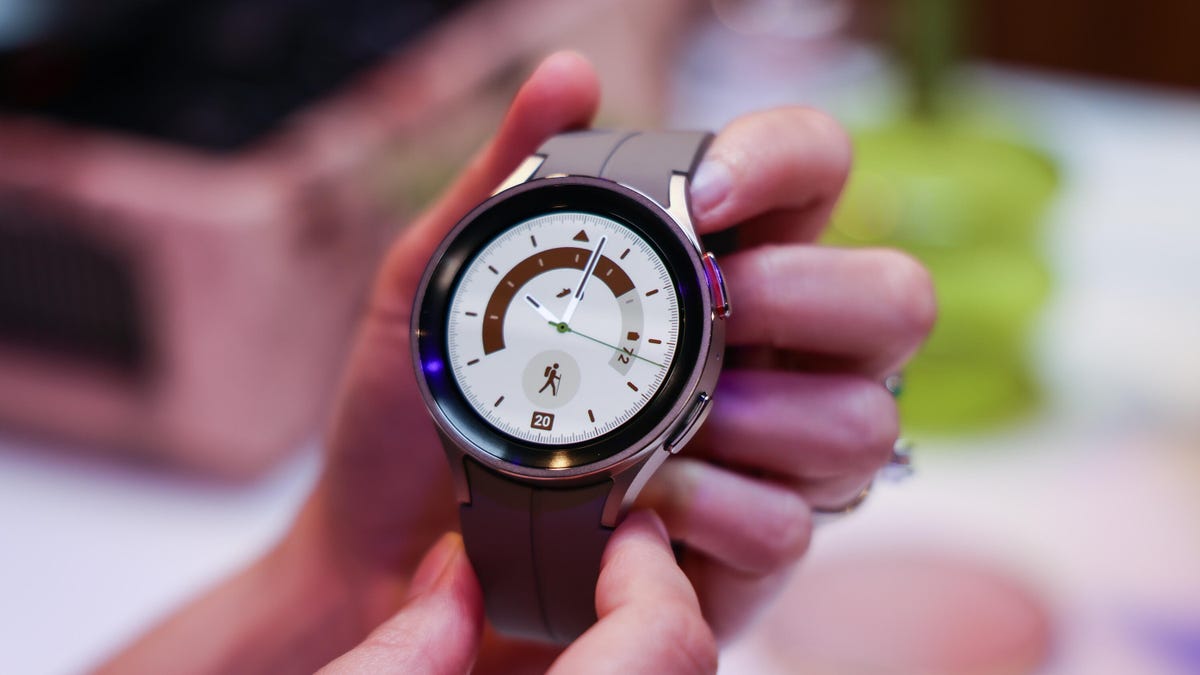
The titanium-cased Pro model has a very large battery, and a higher price.
Lisa Eadicicco/CNETBattery life: An extra boost
The previous Watch 4 had a 361-mAh battery for the 44mm size, or 247 mAh for the 40mm version. The Watch 5 has a 410-mAh battery in the 44mm size, or 284 mAh in the smaller model. That should theoretically give a bit more battery life, although who knows how much specifically; the last Watch 4 tended to last about two days or so on my wrist.
The bigger jump comes in the new Watch 5 Pro model, which has a huge 590-mAh battery. That could mean three days of battery life, depending on use. Samsung is pitching the oversized Pro (with its higher cost and titanium case) at runners using GPS, or outdoorsy people who might want extra durability and battery life.
Skin temperature: Another watch joins the trend
Samsung's Watch 5 has the heart rate sensors, bioimpedance electrical sensor and ECG sensor of the previous Watch 4, but the infrared-based skin temperature sensor is new -- to Samsung watches, at least. Temperature sensing has been a recent trend in wearables: Fitbit's watches have had it for a couple of years, Amazon's Halo bands have it, the Oura ring has it and Apple's next watch is reported to have it.
Skin temperature will be added to the rest of Samsung's health metrics to build out different ways to perceive wellness changes, but it's unclear in what way it might evolve. Based on previous experience with other skin temperature sensors, this is how they work: the results are relative, not specific, focused more on changes over time than any specific thermometer-like reading. I've found that it could help pre-sense a possible sickness, but how Samsung uses it remains to be seen.
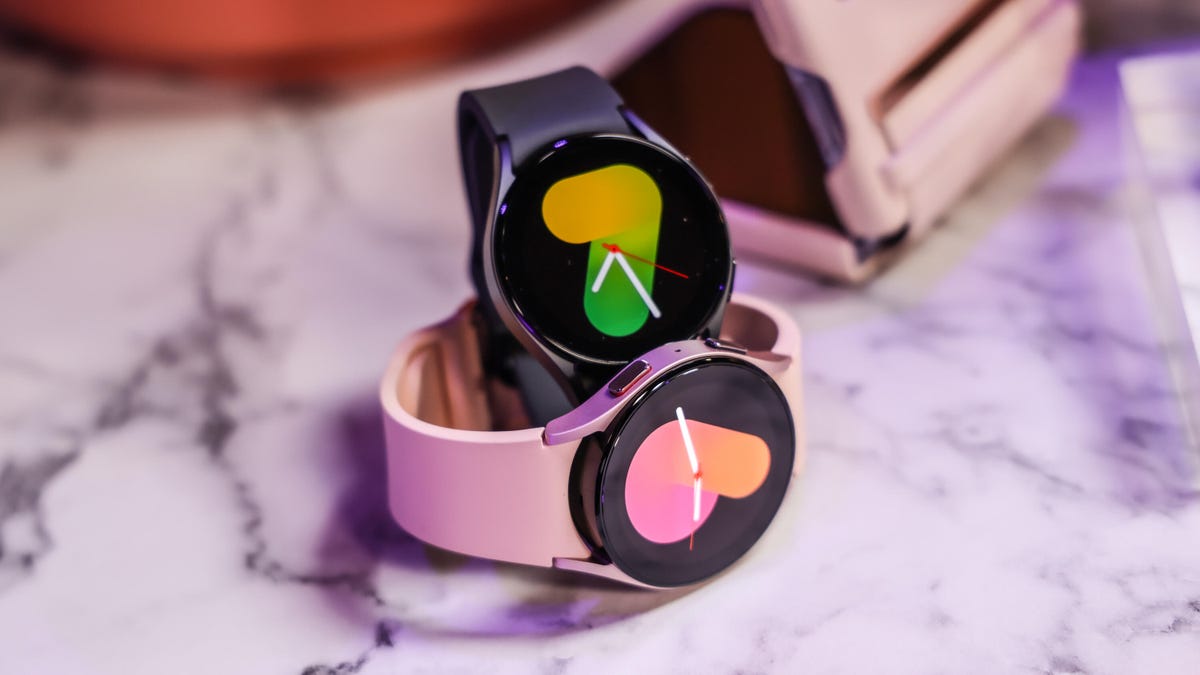
The look of the Galaxy Watch 5, in general, remains the same.
Lisa Eadicicco/CNETDesign: Familiar (and a bit bigger for the Pro)
The Watch 5 looks to have similar dimensions to the last Watch 4 models, but a few grams heavier for both sizes. Color options include graphite, sapphire, pink gold and silver.
Meanwhile, the bigger-battery Watch 5 Pro is notably larger, with an extra millimeter in thickness, and extra millimeter-plus in length and width over the 44mm Watch 5. At 46.5 grams, it's significantly heavier, creeping towards nearly twice the weight of last year's 40mm Watch 4 (25.9 grams). The titanium case design comes in either black or gray, with a D-buckle on the sport band.
Samsung's adding a bunch of new watch faces this year, on top of a collection that already were pretty excellent last year. These watch faces and their colors will offer up most of the customized looks for most people, anyway.
One thing that does appear to be gone, though, is that physical rotating bezel that was on the classic Watch 4 design. Samsung's touch bezel is now the default way of interacting, but the company will keep the Galaxy Watch 4 Classic in the lineup if you want a watch with a physical dial.
More durable?
Samsung has moved to sapphire crystal for the Watch 5, which it's promised will be 60% harder. Will that mean better scratch resistance, or improved durability from shattering?
The Watch 5 Pro is, of course, promising an even better sapphire crystal, plus a titanium case around the watch (versus aluminum on the regular Watch 5).
Other specs
Both watches have optional LTE models with cellular onboard (no 5G this year, although no other watch has 5G either), plus 5 ATM of water resistance for swimming. The same array of health sensors are in both models including ECG, heart rate, temperature and bioimpedance sensors. The watches also include 16GB of storage for music or apps, dual-band Wi-Fi and Bluetooth 5.2.
Notably, neither watch uses Qualcomm's recently announced Snapdragon W5 chip, which promises better battery life and is coming to other Wear OS watches later this year. Instead, Samsung's using its own dual-core Exynos W920 1.18GHz processor, which looks to be the same as last year's Watch 4. Watch processors aren't the sort of things most people eagerly look forward to, and it's unknown yet how much better Qualcomm's new chipset could be.
Android only, but more specifically made for Samsung phones
Much like the Galaxy Watch 4 last year (and other new Wear OS 3 watches we know of), the Watch 5 won't work with iOS. It's only for Android phones (according to Samsung, Android 8 or higher, with more than 1.5GB of RAM). But, more specifically, its ECG, stress and bioimpedance sensors only work with Samsung phones. Last year, these health features needed Samsung phones to work, too.
If this remains true, it's a big limit to how appealing the Watch 5 will be to most Android phone owners: it's worth waiting for Google's Pixel Watch, which is expected by the end of the year, to see how its health features compare. The biggest difference with Samsung's newest watch this year is that it won't be the only Wear OS 3 watch around anymore.
§
The Apple Watch Series 8, expected to be announced at Apple's Sept. 7 event, could mark a couple of milestones for Apple's popular smartwatch. It might be the first to include a temperature sensor and also the first to come in a new "Pro" variant tailored for extreme sports. That's if reports from Bloomberg and The Wall Street Journal turn out to be true.
The Series 7, which Apple unveiled alongside the iPhone 13 lineup last September, didn't receive many significant changes apart from its enlarged screen, faster charging and improved durability. Other than the expected temperature sensor, the standard Series 8 may follow the same route. Bloomberg reports the Series 8's hardware will be generally similar to that of the Series 7.
We'll know for sure once Apple announces its next smartwatch. The company is expected to introduce the Series 8, a Pro version of the Series 8 and a new Apple Watch SE this fall alongside the iPhone 14 and AirPods Pro 2. Until then, current Apple Watch owners will get new software features when WatchOS 9 debuts this fall.
Read more: Best Smartwatches for 2022
Health: Apple Watch Series 8 may debut a temperature sensor
Years before the pandemic, Apple already held long-term health ambitions for its popular wrist accessory, with CEO Tim Cook describing health as Apple's "greatest contribution to mankind." And according to reports by Bloomberg and The Wall Street Journal, Apple may further those ambitions with the addition of a temperature sensor in the Apple Watch Series 8.
The temperature-sensing feature could bring new fertility planning tools to Apple's smartwatch, according to the reports. A more recent Bloomberg report suggests the Series 8 may be able to detect fevers. But that doesn't mean you should expect to get a specific temperature reading like you would when using a standard thermometer. Instead, Bloomberg says it will likely be able to tell whether you might have a fever and would recommend using a dedicated thermometer or consulting a doctor.
There are also a number of other health features in Apple's pipeline, according to the reports, though such tools are said to still be in development. They include glucose monitoring, a tool that alerts users if their blood oxygen level drops, sleep apnea detection and blood pressure monitoring, according to the Journal and Bloomberg. But these features are expected to be far off and likely won't appear in the Apple Watch for years. Bloomberg reported that the blood pressure tool wouldn't be ready until 2024 at the earliest.
The blood pressure tech would likely work by using sensors to measure the speed of the wave a heartbeat sends through a person's arteries, reports the Journal. Unlike traditional blood pressure monitoring cuffs, which are usually strapped around the upper arm, it wouldn't provide baseline systolic and diastolic blood pressure measurements. Instead, it would tell you how your blood pressure is trending, the report said. Samsung has previously incorporated a similar blood pressure feature in the Galaxy Watch 4, which is available in some countries and regions like South Korea and Europe, where it's received regulatory approval.
Read more: A New Apple Watch SE Sounds More Exciting Than the Series 8
A new model: The rugged Apple Watch Pro
According to Bloomberg, Apple will launch its largest smartwatch yet this fall. This new model, which has been referred to as the Apple Watch Pro or Apple Watch Explorer Edition, will reportedly have a larger nearly 2-inch screen, a bigger battery and a more durable exterior compared to the standard flagship model. This watch would be targeted toward those who participate in extreme sports and other adventurous outdoor activities.
The display increase means the Apple Watch Pro will have 7% more screen space than the current largest Apple Watch, which is the Series 7, according to the report. That could pair nicely with the new watch faces fitness statistics Apple just announced in WatchOS 9. Bloomberg has been reporting on this new rugged Apple Watch since last year but recently published newer details on the screen size and larger battery.
Design: Apple Watch Series 8 may get a new size
By and large, the overall aesthetic of the Apple Watch has remained virtually unchanged since the original one made waves back in 2015. But rumors suggest Apple may add another new Apple Watch size after enlarging the display of the Series 7. According to posts on Twitter by display analyst Ross Young, a third size of the Apple Watch may come to fruition this year. Bloomberg also says there's been some internal discussion about the Series 8 getting an updated display, but it's unclear if that means its size would change.
However, there's a chance this new display size may be exclusive to the so-called Apple Watch Pro. A July 6 report from Bloomberg says the new rugged Apple Watch will have a screen measuring almost two inches diagonally, while the regular Series 8's display will be the same size as the Series 7's.
Performance: Similar to the Series 7
Apple isn't planning on making major changes to the Series 8's performance, according to Bloomberg. The Series 8's processor reportedly has the same specifications as the Series 7's chip, which already shares many similarities with the Series 6's chip. Apple is saving a more significant processor update for next year's Apple Watch, Bloomberg reports.
The decision to essentially keep the same processor for three Apple Watch generations is significant. It suggests the Apple Watch has matured to the point where year-over-year performance changes aren't very dramatic. Instead, the biggest areas where the Apple Watch is showing signs of growth involve health tracking and new software features, as Apple has shown with WatchOS 9.
Battery life: A new low-power mode
Since the Series 8 is expected to have a processor that's similar to the Series 7's, I'd expect battery life to remain the same, too. But the Series 8 might get a different update aimed at extending battery life: a new low-power mode. Bloomberg previously reported that WatchOS 9 would include a new low-power mode that would allow the watch to run certain apps and features while conserving battery life. That feature didn't make it into Apple's latest software update, but a more recent Bloomberg report suggests that it could arrive as an exclusive for Apple's next-generation smartwatch. The rumored Apple Watch Pro is also said to have a larger battery, according to Bloomberg.
Looking for more Apple updates? Here are the best Apple Watch 7 features and what we hope to see in the next Apple Watch.
§
What's happening
The Apple Watch is an excellent smartwatch and fitness tracker, but I'd like to see more wellness tools, longer battery life and additional uses for its U1 chip.
Why it matters
Apple is a leader in the wearables market, but competitors like Fitbit and Oura are ahead in certain areas.
What's next
Apple is expected to announce new Apple Watch models in the fall.
The Apple Watch did little more than send iPhone alerts to your wrist when it launched in 2015. Now, roughly seven years later, it's evolved into a powerful fitness tracker and communication device. That said, there are plenty of ways Apple could improve its smartwatch.
While the Apple Watch's wide selection of workouts, intuitive software and addictive Activity Rings have made it my favorite fitness tracker, I often find myself wanting more. Other gadget-makers, like Oura and Fitbit, are outpacing Apple in certain areas, particularly when it comes to workout recovery. It's time for Apple to catch up, and I'm hoping its next smartwatch helps the company get there.
Apple typically releases new Apple Watch models in the fall. But we got a preview of the new WatchOS 9 software coming to the Apple Watch Series 4 and later at Apple's Worldwide Developer Conference in June. Here's what else I'd like to see.
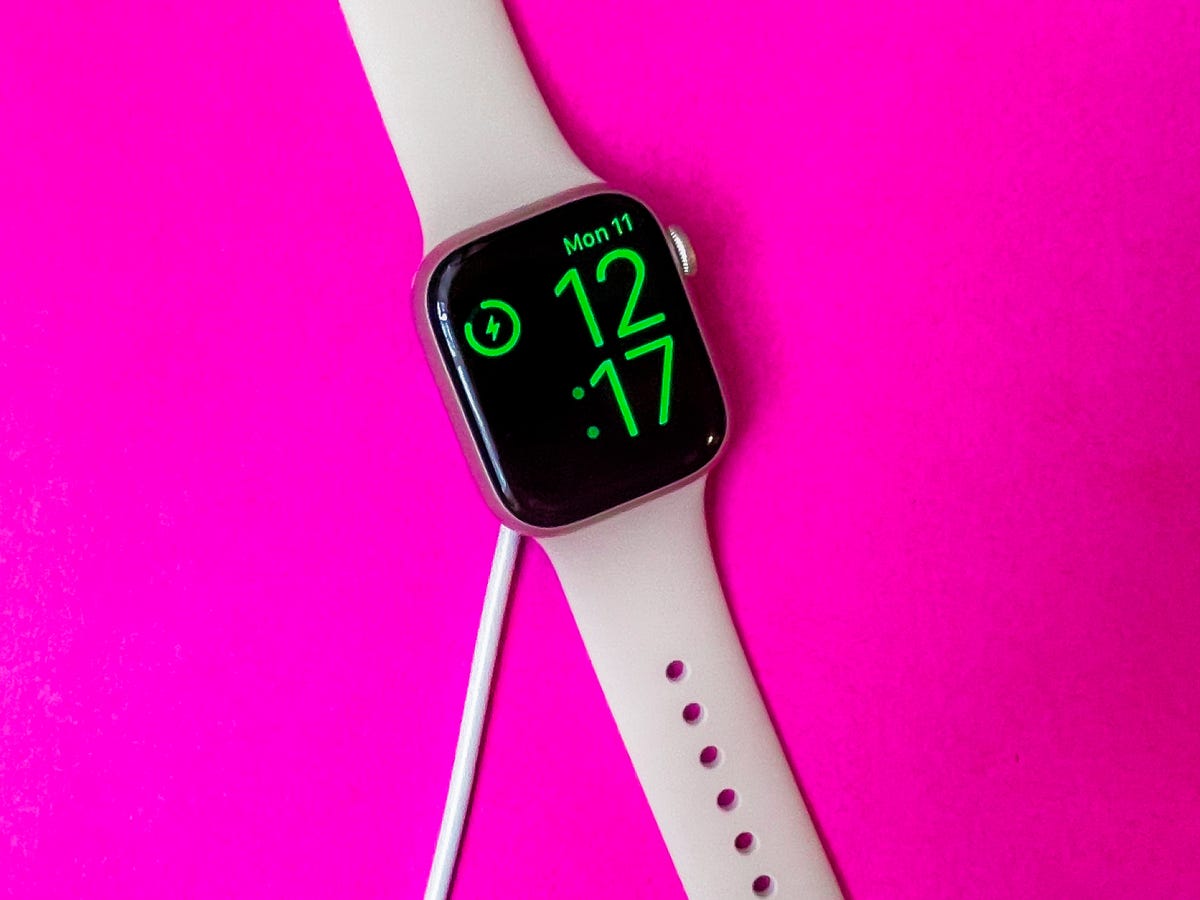
The Apple Watch Series 7 can charge faster, but I also want longer battery life.
Lisa Eadicicco/CNETLonger battery life
Battery life has long been the Apple Watch's Achilles' heel. While the Apple Watch can usually get me through about a day and a half, Fitbit trackers and watches can last multiple days on a single charge. The Fitbit Sense, for example, can typically function for two to four days before requiring a charge, while the Fitbit Versa 3 has lasted up to six days according to CNET's reviews. (But remember that battery life will always vary depending on usage.)
I'd love to see multiday battery life from the Apple Watch, even if it's only three days. That would be enough to take my Apple Watch on a weekend trip without having to worry about plugging it in or packing a charger. It would also make the Apple Watch a more viable sleep tracker. I haven't been using the Apple Watch to track sleep very often because I find its exercise and activity tracking to be a more valuable use of its battery. But extending the amount of time between charges could change that.
To be fair, Apple has worked around this by improving the Apple Watch's charging speed with the Series 6 and 7. And that is helpful to some degree. If you wear your Apple Watch overnight, you can top it off during your morning routine and still have enough juice to make it through the day.
For most people, that's an adequate solution. But since I'm so obsessed with closing my Activity Rings, my Apple Watch remains strapped to my wrist for as long as I'm awake. I also rely on it to keep me on schedule as I'm getting ready to leave the house in the morning, so I'd rather have it sitting on my wrist than its charger.
Apple might have another battery workaround in its pipeline that could debut with the Apple Watch Seres 8. The new watch might include a new low power mode that would enable the Apple Watch to run some apps and features while preserving its battery, according to Bloomberg. It sounds like the new feature will allow for more functionality than the watch's current power reserve mode, which only shows the time. Bloomberg previously reported this feature would arrive in WatchOS 9, but there was no mention of it at WWDC.
Read More: A New Apple Watch SE Actually Sounds More Exciting Than the Series 8
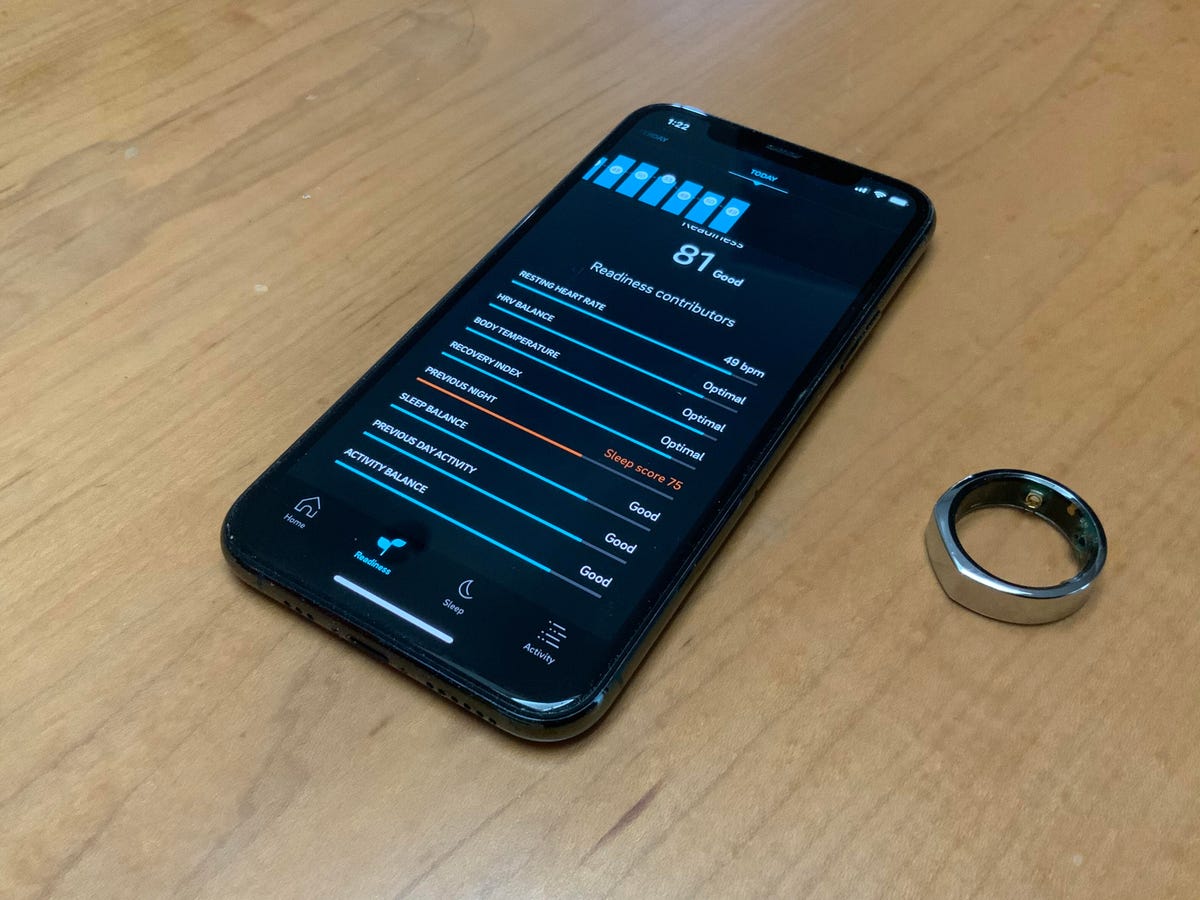
The Oura app's daily Readiness score, a combination of multiple measurements.
Scott Stein/CNETWorkout recovery features
My Apple Watch can tell me a lot of things, like how many active calories I've burned and long-term progress toward my fitness goals. But one thing it can't tell me is whether I need a rest day.
Since I'm usually very fixated on closing my Activity Rings, I sometimes push myself to work out when I probably need to take a break. There are also times when I know I can push myself harder, but I still opt for an easier workout. It would be great if the Apple Watch could help me navigate those decisions based on bodily signals, my recent activity and sleep.
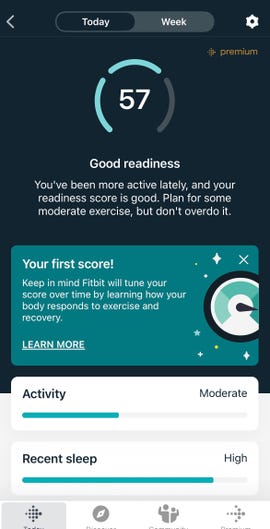
Fitbit's daily readiness score.
Screenshot by Lexy Savvides/CNETOura and Fitbit already offer metrics like this: readiness scores. As the name implies, a readiness score indicates whether your body is rested enough to tackle a heavy workout, or if you should skip the gym and rest up. Both Oura and Fitbit also offer advice and can adjust your fitness goals based on your score. For example, these apps might tell you to pay attention to how you're feeling and get some rest if you receive a low score. And if you receive a good or average score, they might suggest a moderate workout.
The Apple Watch can nudge you to move if you haven't made much progress toward closing your rings. It can also congratulate you when you've had a particularly active day. But it doesn't have a specific metric that prioritizes recovery like Oura and Fitbit's readiness scores. The Mindfulness app and Apple Fitness Plus' mediation programs certainly help, but it would be nice to see recovery built into the Apple Watch's goals and metrics in a meaningful way.
It sounds minor, but tips like this go a long way. On days when I'm feeling tired, a low readiness score along with a reminder to take it easy provides further validation that I don't need to commit to a full workout if I don't feel up to it. The Apple Watch's mindfulness reminders don't go far enough since they're easy to ignore. The readiness score usually correlates more closely with how I'm feeling based on my sleep and activity, so it feels more meaningful than a reminder to take a deep breath.
The Apple Watch's Workout app is getting new metrics in WatchOS 9 like heart rate zones and the ability to customize recovery intervals during a session, which could make it easier to manage your intensity during a workout. But the Apple Watch still won't have an alternative to the readiness scores found in apps from other fitness device makers.
The Apple Watch already does a good job motivating me to move. Now it just needs to remind me to rest.
Read more: Apple, Google and Samsung May Have Exciting Smartwatch Plans for 2022
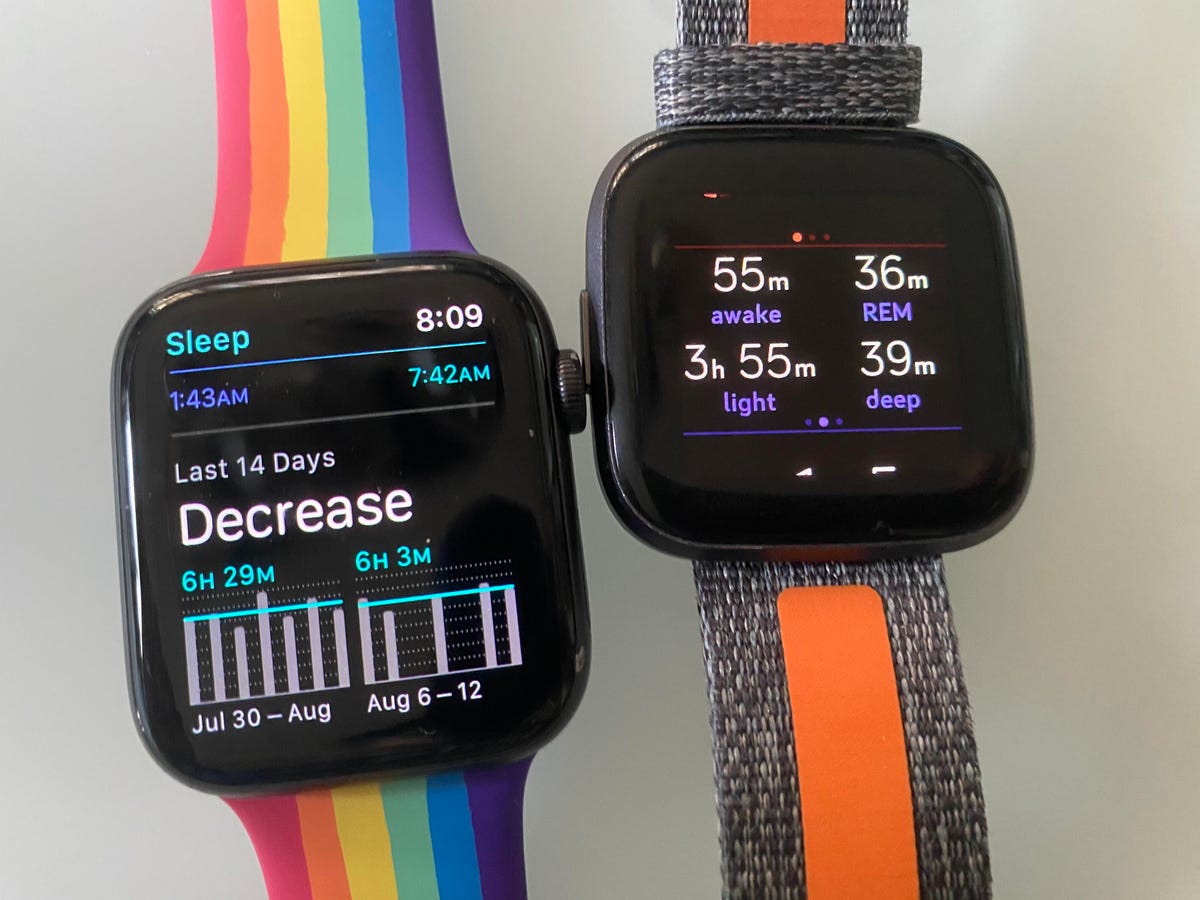
The Apple WatchOS 7 sleep app shows just overall sleep time, while devices like the Fitbit Versa 2 (right) show estimated light/deep and REM phases, plus a sleep score.
Scott Stein/CNETA sleep score
The Apple Watch will get a big upgrade to its sleep tracking capabilities when WatchOS 9 arrives this fall. Apple is finally bringing the ability to measure different stages of sleep to the Apple Watch, a long-requested feature that other fitness devices from Oura and Fitbit have offered for years. While this is a major improvement, it looks like the Apple Watch still won't provide the level of sleep coaching found on other devices.
Oura , Fitbit, Samsung, Amazon and Withings all offer a sleep score that asses the quality of your sleep to help you make more sense of all the metrics these devices gather overnight. Similar to the previously mentioned recovery feature, these scores help me contextualize my sleep and help motivate me to get more rest when I need it. Samsung and Fitbit also offer sleep coaching programs that make observations about your sleeping patterns over a period of time to provide more targeted advice.
The Apple Watch can already record data about sleep duration, time spent in bed, sleeping pattern trends and respiratory rate. The addition of sleep stages is a big step toward making the Apple Watch feel like an even more well-rounded wellness device, but I'd still like to see more.
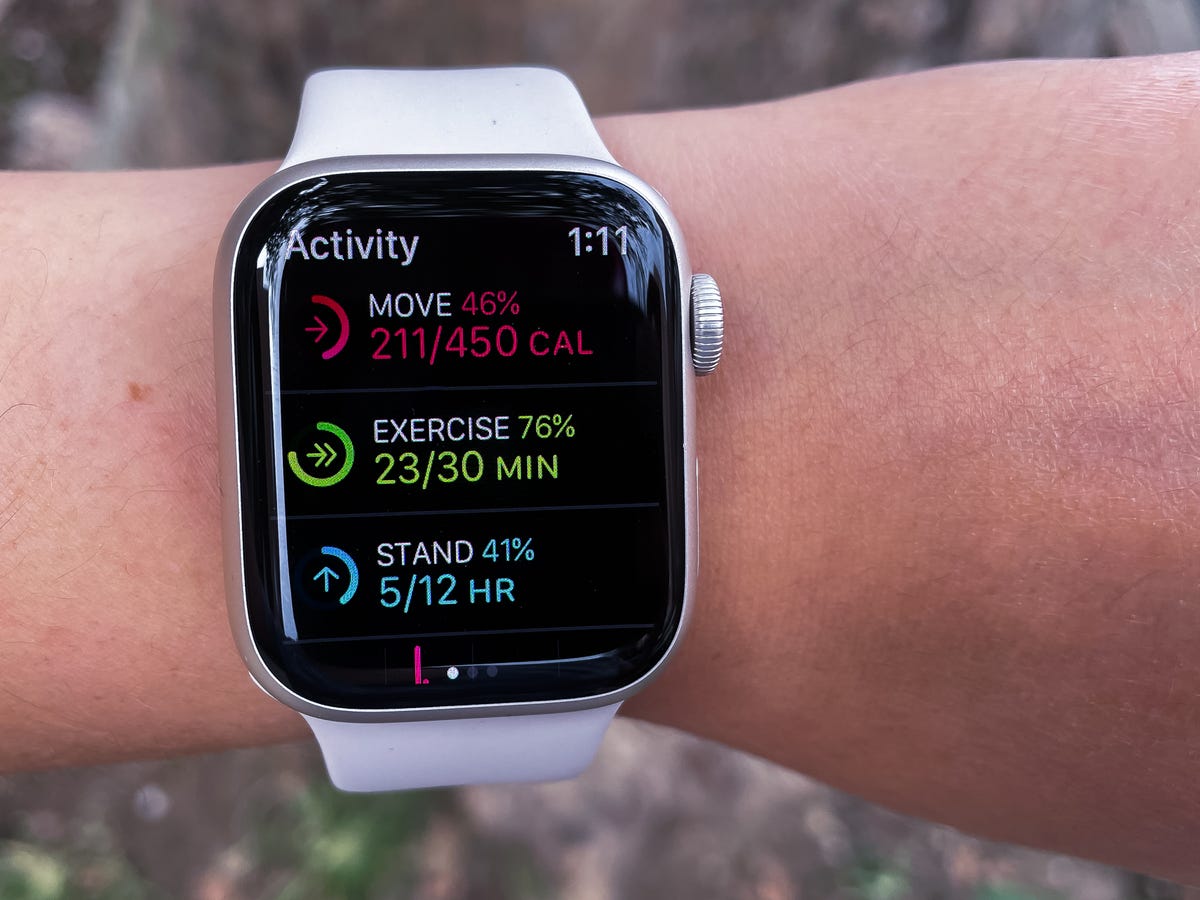
I'd love to change my Apple Watch's activity goals depending on the day.
Lisa Eadicicco/CNETDifferent activity goals for specific days of the week
It's rare that any given day is exactly the same when it comes to exercise. Factors like how much sleep I got the night before, social plans, what I've eaten that day and whether I'm commuting to the office all impact how active I am. That's why I wish I could adjust the Apple Watch's goals according to each day of the week.
You can change your move, stand and exercise goals on the Apple Watch by opening the Activity app and tapping the Change Goals button. But there aren't any options for tailoring those goals to specific weekdays. I'd love to increase my move goal on days when I know I'll be heading into the office, since my commute involves a lot of walking.
Read more: Why Apple Should Launch an iPhone Subscription Plan
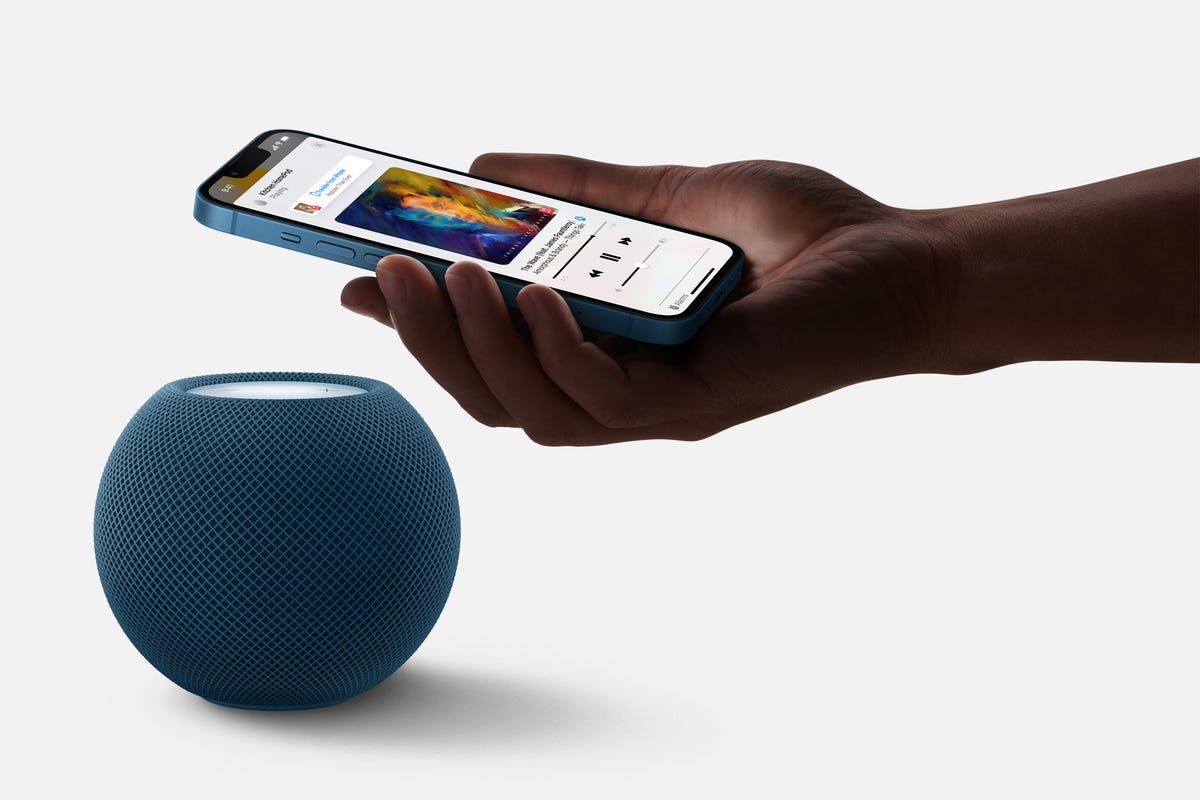
The HomePod Mini uses the U1 chip to improve the way audio is transferred between devices.
AppleMore uses for the U1 chip
The Apple Watch Series 6 and 7 as well as the iPhone 11, 12 and 13 have Apple's U1 ultra wideband chip. If you're not familiar, ultra wideband is a wireless short-range protocol that allows for precise location tracking. But don't think of it as an alternative for GPS. Rather, UWB is often used to help devices communicate with nearby gadgets within the same room. It makes Apple's AirDrop sharing feature work more quickly since it can locate other nearby iPhones with more precision.
Ultra wideband, or UWB, also improves the way the iPhone and Apple Watch models function as digital car keys. Compatible cars can recognize your device when it's nearby, meaning the car will unlock as you approach it rather than requiring you to hold your phone or Apple Watch near a key reader.
This is a promising start, but I'd love to see even more clever use cases for the U1 chip. In theory, UWB could give our devices another layer of intelligence that essentially enables nearby gadgets to react to your presence. My colleague Stephen Shankland came up with some ideas for how UWB could be practically useful when he wrote about the technology last year.
Imagine if your TV could automatically switch to the right Netflix profile once it recognizes that your phone or watch is nearby. Or what if your smart speaker only gave calendar alerts relevant to the people in the room? Apple seems to be moving in this direction as evidenced by the HomePod Mini, which can provide certain haptic effects when transferring audio to an UWB-equipped iPhone. I'm hoping to see even more functionality like this built into the Apple Watch.
We'll likely have to wait until the fall to learn what's in store for the next Apple Watch. Based on Apple's history, it seems plausible to expect routine upgrades like a new processor. But since the Series 7 felt more like a refinement of the Series 6 rather than a generational upgrade, I'm hoping to see bigger updates in the near future.
Source


